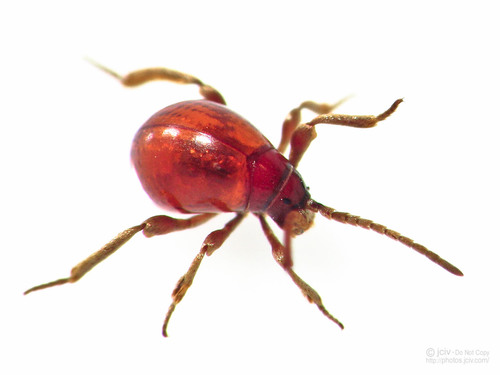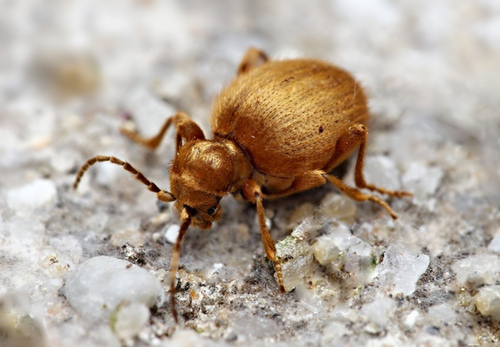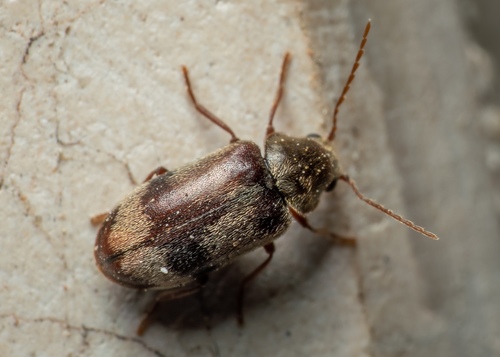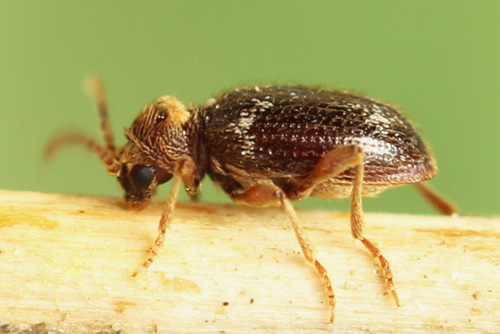
About Ptinus fur (Linnaeus, 1758)
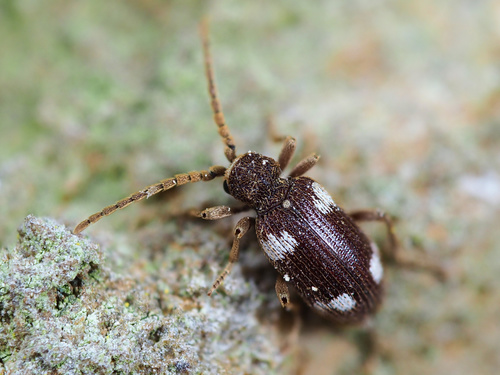
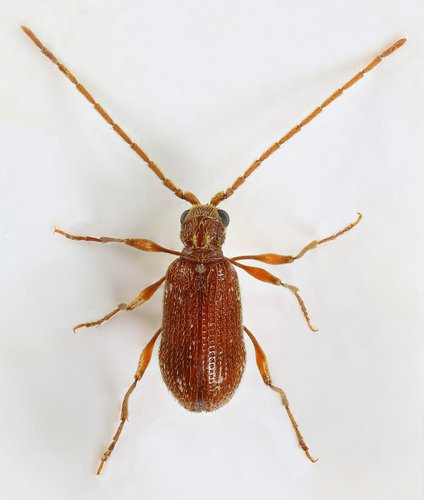
Adults of Ptinus fur are morphologically similar to other spider beetle species, most closely resembling the hairy spider beetle Ptinus villiger. This species is red-brown, covered with yellow hairs, and reaches a body length of 2.0–4.3 millimetres (0.08–0.17 in). Its prothorax is densely covered with pale hairs, and its elytra carry scattered patches of white scales. Ptinus fur has a worldwide distribution, and acts as a pest of stored foods. Infestations can be recognized by the webbed, granular material the beetles leave behind on stored products. Adult Ptinus fur feed on dried, decaying animal and vegetable material. The species is also a documented museum pest that damages stored collections. It has additionally been found within the nests of birds, particularly sand martins. The optimal temperature for Ptinus fur development is 23 °C (73 °F). At this temperature, the species can complete its full life cycle in 132 days when raised on fishmeal, and completes the cycle even faster when raised on wheat-based feed, according to research by Howe and Burges. At 23 °C, P. fur larvae normally moult three times, though some individuals undergo an extra moult when grown on certain growth media. A subset of final-instar P. fur larvae can enter diapause inside their cocoons. At 23 °C, this diapause can last 220 days after other larvae have already pupated; at 20 °C (68 °F), diapause is reported to last up to 280 days. Per Howe and Burges, adult Ptinus fur live for several months, and adult beetles may also enter diapause inside cocoons.