About Ptilotula fusca (Gould, 1837)
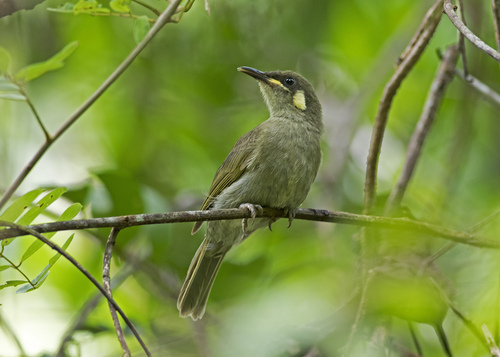
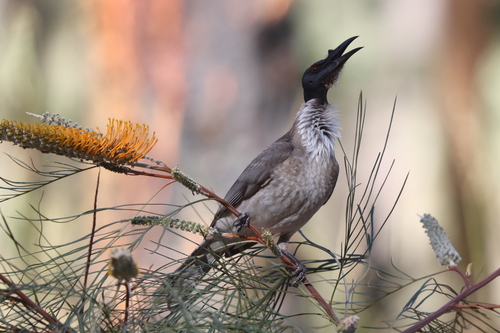
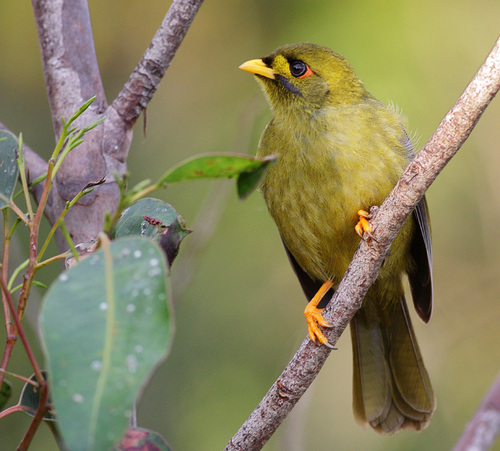
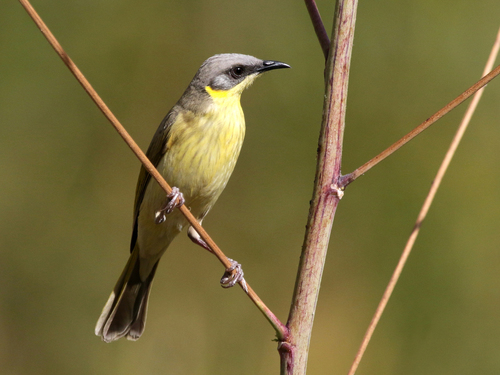
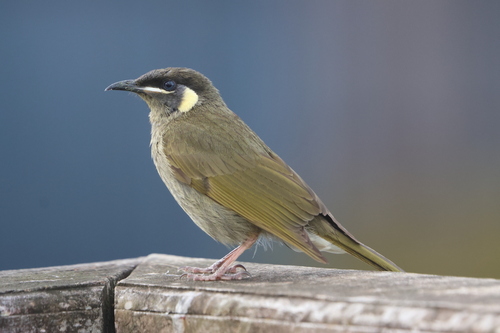
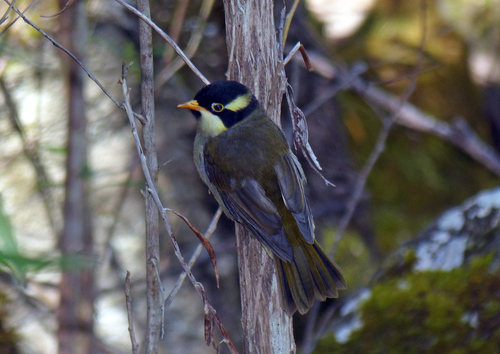
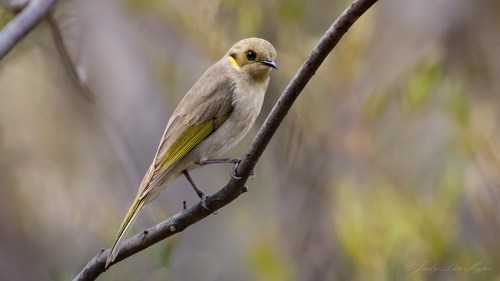
The fuscous honeyeater, Ptilotula fusca, has dull grey-brown to olive-brown coloration on its upper body, and buffy-grey coloration on its underparts. Its bill is black, and its eye-ring is dark. A small black and yellow plume, formed by the rear edge of its ear coverts, is present on the bird. Species similar to the fuscous honeyeater include the grey-fronted honeyeater, yellow-plumed honeyeater, and white-plumed honeyeater. Fuscous honeyeaters live in colonies in dry eucalypt forest and woodland. Most of their habitat lies inland of the Great Dividing Range, but they also occur in coastal heathy forest in New South Wales and Queensland. They are sometimes also found in gardens, and in patches of remnant forest on farms. They are mostly sedentary, though they will make some nomadic movements in response to drought and eucalypt flowering. In the southeast of their range, they make small seasonal altitudinal movements, moving down from higher regions during colder months.