About Pterygoplichthys gibbiceps (Kner, 1854)
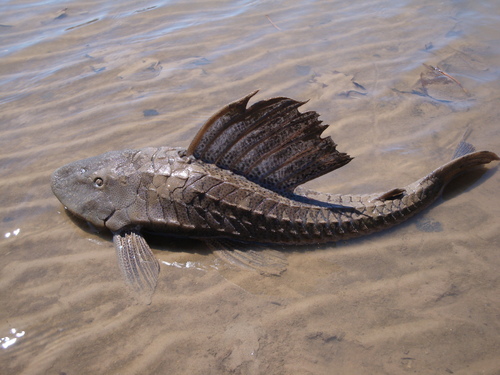
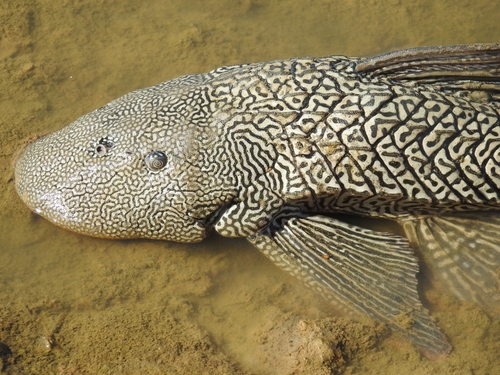
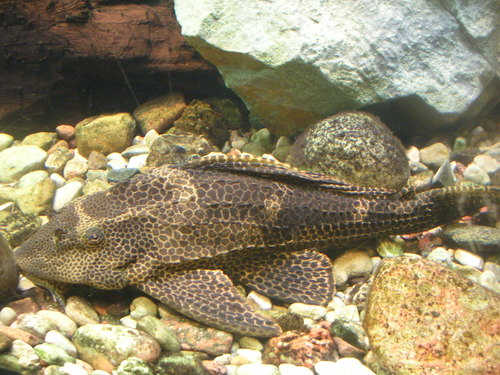
Pterygoplichthys gibbiceps (Kner, 1854) is a species of armored catfish native to Brazil, Ecuador, Peru, and Venezuela, where it occurs in the Orinoco and Amazon basins. This species displays all the characteristic features of its genus: a large dorsal fin with more than nine rays, prominent nasal flares, a distinct hump or crest located anterior to the dorsal fin, and a substantial dorsal fin base. Adult P. gibbiceps easily reach a total length of 50 centimetres (20 in) and can live for over 20 years. It has the typical body shape of a pleco. Its base patterning consists of mostly irregular, fairly large brown spots on a yellowish background that creates a honeycomb-like appearance; additional pattern features common to closely related species can be seen upon close inspection. As the fish grows, its spots become smaller. Like most plecos, this species is primarily herbivorous, though it will also consume dead animals. In the wild, P. gibbiceps forms shoals in the sluggish rivers of the Amazon and Orinoco systems, and also occupies flooded land during the wet season. During the dry season, P. gibbiceps aestivates in burrows around 1 metre (3 ft 3 in) long that it digs into mud banks along rivers; egg rearing is also presumed to occur in these burrows. The species name comes from the Latin words gibbus (meaning hump) and caput (meaning head), a reference to the centrally located head ridge. Common names for this species include 'gibbys', leopard sailfin catfish, and clown plecs; juveniles have a comical appearance from their large, obvious spots. Ancistrus gibbiceps and Glyptoperichthys gibbiceps are synonyms of P. gibbiceps. The fish has recently been caught in the Ganges River near Banaras, India, and is suspected to be a new addition to the list of invasive exotic fish species in India. It is almost impossible to tell males and females apart. Males can be identified when they are in a group, as they tend to become more territorial. For reproduction, females lay roe in caves or root hollows. Spawn have a high mortality rate until they reach 5 centimetres (two inches) long; the cause of this high mortality is unknown. Pterygoplichthys gibbiceps is an omnivore. In captivity, it can be fed vegetables including nettles, lettuce, spinach, or carrots. Its diet can also include meat such as earthworms, blood worms, or chopped shrimp. It will also eat commercial prepared pet foods, especially sinking algae wafers. The best approach to breeding P. gibbiceps is to feed them a wide range of foods. With a good diet, they grow quickly, reaching up to 30 centimetres in one year. Adult P. gibbiceps may eat many types of aquarium plants.