About Pteropus niger (Kerr, 1792)
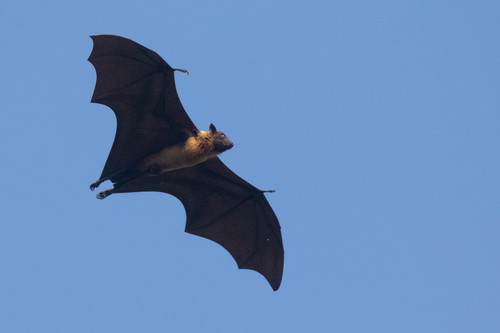
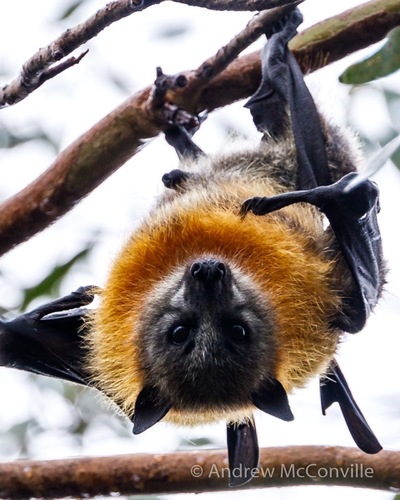
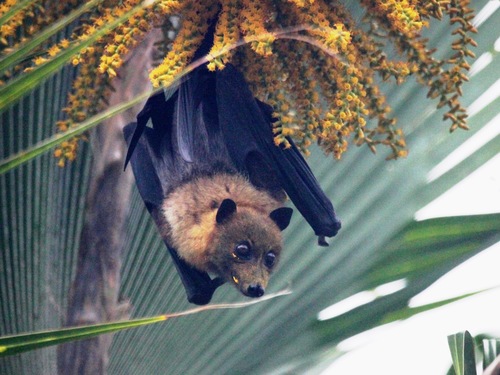
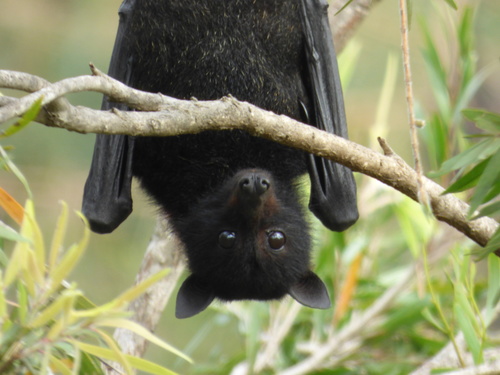
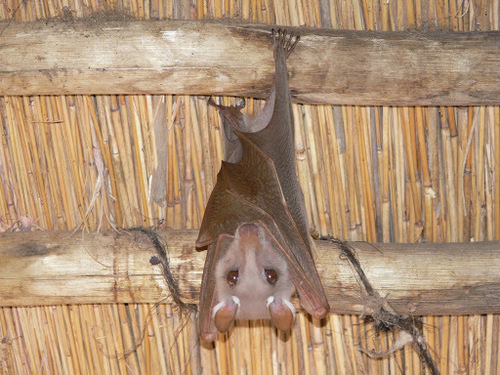
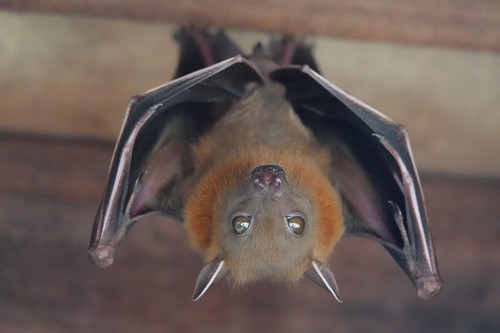
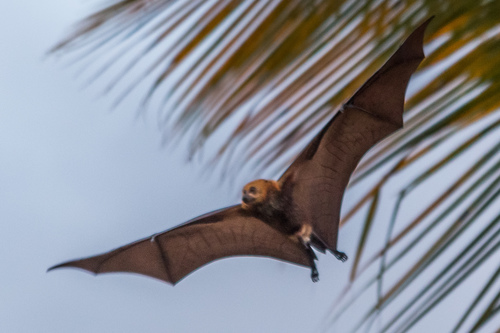
The Mauritian flying fox, scientifically named Pteropus niger (Kerr, 1792), can reach a wingspan of 80 cm (31 in), making it the largest endemic mammal on Mauritius. Its fur is golden, it has small ears, and thick hair grows on its tibiae. Its dorsal coloration includes a glossy, blackish brown mantle tinged with rufous, which extends backward into a dark brown median spinal tract flanked by buff lateral patches. It is a medium-sized species; the average adult forearm length is 152 mm, with no size difference between males and females. Individuals range in weight from 40 to 800 g. The species is mostly nocturnal, though some individuals are occasionally seen during the day, and they normally finish roosting by sunrise. They occur from sea level up to 1,500 m above sea level. This flying fox lives in forests within the Black River Gorges, Combo, and Bel Ombre national parks. It can occasionally be found in fruit plantations, which brings it into conflict with farmers. No roosts of these bats exist in village areas; most bats are located in the Bel Ombre forest, with smaller populations in the Combo Forest and near Black River Village. Mauritian flying foxes roost in large groups and are active at dusk and dawn. Their diet consists of fruit and nectar, which makes them important seed dispersers and pollinators for the local ecosystem. Since less than 1.9% of Mauritius supports native vegetation, and native plant species have poor reproductive success, the survival of this species is important for the entire island ecosystem. The diet of the Mauritian flying fox consists mainly of fruits. One study found the bats consume 20 species of plants, 18% of which are native to Mauritius. 36% of these native plant species are either vulnerable or rare. The bats disperse many seeds in flight through their feces, which is ultimately beneficial to many native plant species. P. niger is an opportunistic feeder, generally adapting to eat whatever plants or fruits are available to it at any given time. While little evidence supports that P. niger plays a valuable role in the pollination process, its role as a seed disperser is important to the survival of many plant species on Mauritius.