About Pterophylla racemosa (L.fil.) Pillon & H.C.Hopkins
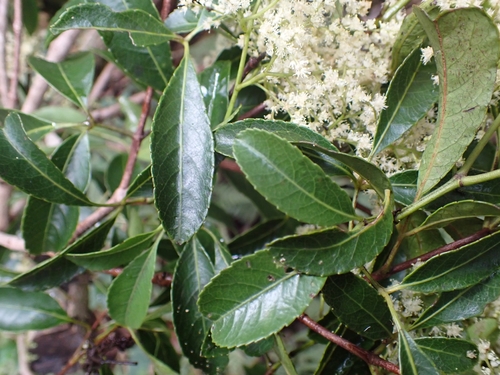
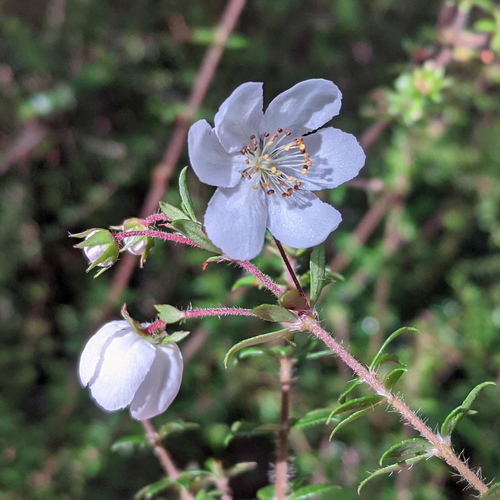
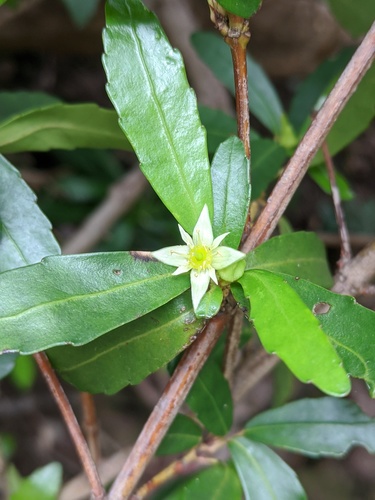
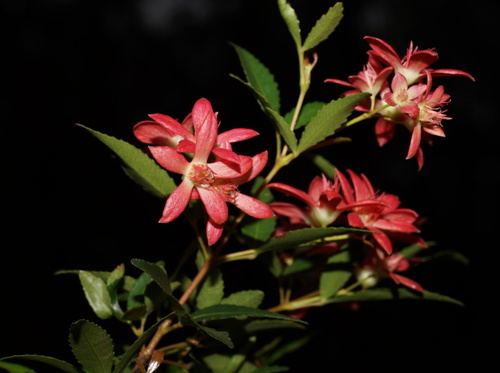
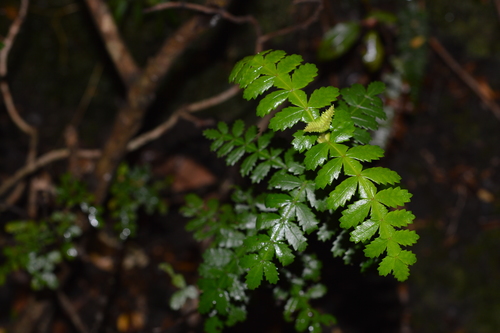
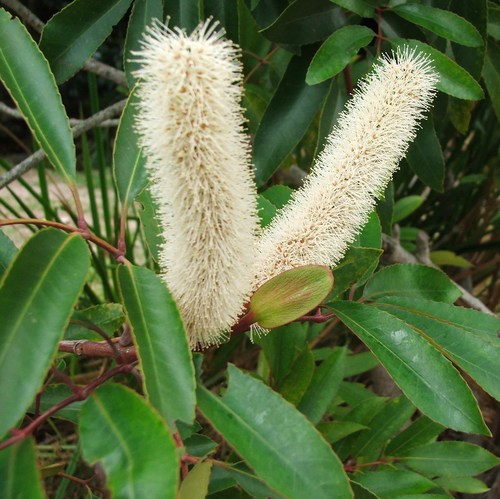
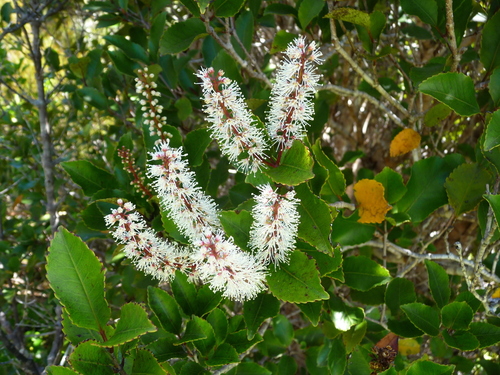
Pterophylla racemosa, commonly known as kāmahi, is a very common evergreen tree native to New Zealand. It typically grows up to 25 m in height, rarely taller, with a trunk reaching up to 24 cm in diameter. The tree bears dark green, leathery leaves that are approximately 7.5 cm long and 4 cm wide. Between October and March, it produces large quantities of creamy-colored sweet-scented flowers that grow in erect spike-like clusters. These flowers are highly attractive to a wide range of insects and birds. While kāmahi itself is endemic to New Zealand, the broader genus Pterophylla has a wider distribution across Madagascar, Malesia, and the southwest Pacific. Most species in the genus grow in tropical or subtropical regions, but in New Zealand, kāmahi can be found as far south as Stewart Island, growing in cold climates including alpine terrain. It occurs in lowland, montane, and subalpine forests and shrubland from the central North Island south to Stewart Island, ranging across habitats from coastal to subalpine zones. It is very widespread in coastal, lowland, and montane forest, and often becomes the dominant tree species in higher elevation montane forest in the uplands of the North Island and western South Island. Kāmahi is a durable, hardy, and persistent plant that can grow in most conditions. It often begins life as a dense shrub, but will grow into a large, erratically growing tree if given sufficient space. The white candle-like flowers that bloom in spring open to release fine seeds that are dispersed by wind, allowing the species to spread seed easily each spring. It is a slow-growing plant that takes time to establish roots, but once established, healthy mature specimens can reach 25 m in height. Ecologically, kāmahi prefers well-drained sites and tolerates infertile soil reasonably well. It can be found growing on hillslopes and roadside cuttings, and will even begin growth perched on the trunks of tree ferns. It has medium water requirements, preferring soil that dries out between waterings, and grows best in free-draining silt or sand-based soils. Despite this preference, kāmahi is highly adaptable and does not require specific climate conditions to grow, thriving in a variety of different areas. Kāmahi flowers in spring, and bees use its nectar to produce honey. Many insects and other invertebrates use kāmahi trees for feeding and movement. A study of invertebrate communities in the Ōrongorongo Valley forest near Wellington found that kāmahi tree trunks provide an important pathway, especially at night, for many ground-living invertebrates that move from the forest floor to feed or breed on tree stems and in the canopy. Monitoring of kāmahi forest on the Kaitake Range by the New Zealand Department of Conservation has recorded damage to kāmahi trees from introduced possums, which damage trees from the canopy down to the ground. While introduced invasive species like possums are a threat to individual kāmahi trees, and the species has not evolved defenses against these invaders, the species remains very common across New Zealand, so possums do not currently pose a major threat to the species as a whole. For traditional medical use, an infusion of the inner bark of kāmahi acts as a purgative. A traditional preparation notes that bark taken from the west side of the tree, with the outer rind scraped off, is steeped in hot water, and the resulting decoction is taken internally as an aperient to treat abdominal and thoracic pain. Bark infused in boiling water makes a good tonic, and the inner bark also acts as a laxative.