About Pterophorus pentadactyla (Linnaeus, 1758)
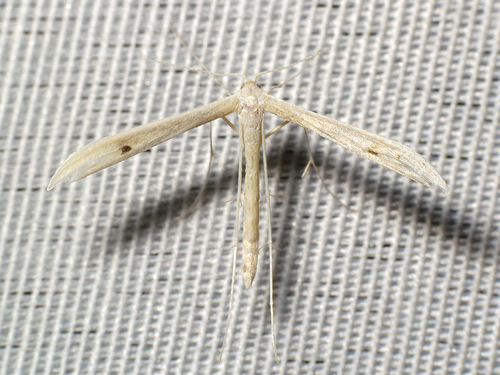
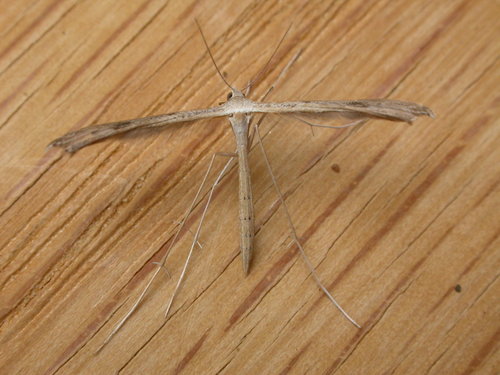
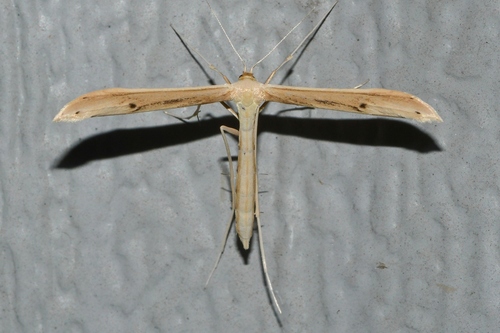
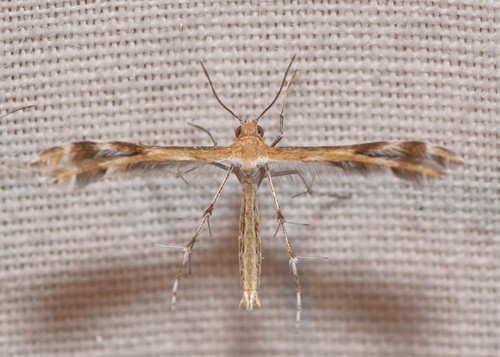
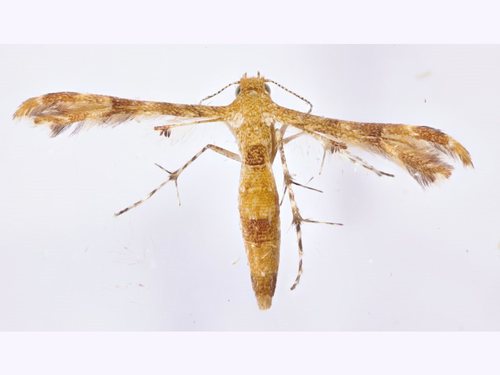
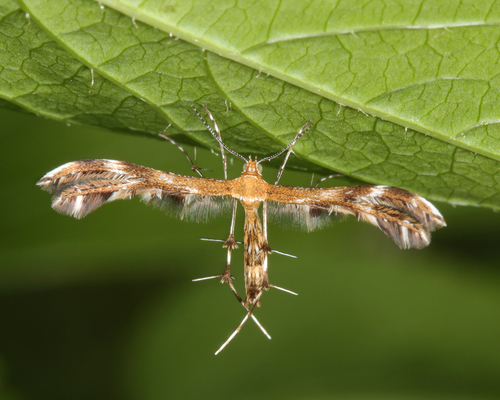
The white plume moth, scientifically known as Pterophorus pentadactyla (Linnaeus, 1758), is a distinctive insect with a wingspan measuring 26 to 34 mm (1.0 to 1.3 in). Adult individuals are pure white, and their wings are divided into five slender, feather-like plumes: two plumes form part of the forewing, while three form part of the hind wing. This species is nocturnal, emerging at dusk, and flies during the months of June and July. Larvae of this moth are green, with a yellow dorsal stripe and tufts of pale hairs. This moth occurs across much of Europe and the Middle East, reaching as far east as Iran, and is also found in North Africa. In Britain, it is common throughout England and Wales, but occurs more locally in southern Scotland and in coastal regions of western, southern, and eastern Ireland. Its typical habitats include rough grassland, road verges, and gardens. Larvae feed on the leaves and flowers of field bindweed, hedge bindweed, and other members of the plant family Convolvulaceae. The species hibernates by overwintering as a small larva. Recent sightings from the Democratic Republic of Congo confirm that this moth is also present in Central Africa.