About Pteronarcys californica Newport, 1848
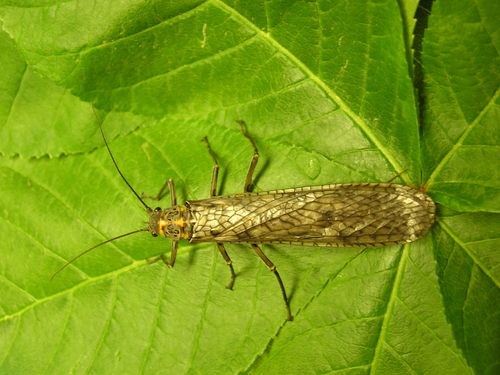
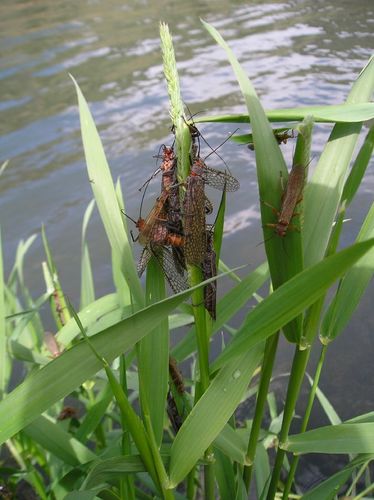
The nymphs (larvae) of Pteronarcys californica can grow to over 5 centimetres (2 inches) in length. The dorsal (back) side of the nymph is dark in color, while the ventral (belly) side is lighter. Their overall coloration can vary, and subtle patterns are occasionally visible on the abdomen. Pteronarcys californica nymphs are detritivores that feed on stream debris that has already been partially broken down by other organisms. They belong to the "shredder" functional feeding group, meaning they break large pieces of detritus into smaller pieces as they feed. Adult Pteronarcys californica are also large. The abdomen, leg joints, and several thorax joints of adults are a bright orange color. Adults have two pairs of large wings that are longer than the body, which they hold flat against the body when at rest. Female adults carry their eggs at the end of the abdomen, where the egg cluster resembles a group of orange salmon eggs. Pteronarcys californica is distributed across western North America, ranging from British Columbia to California. It inhabits higher-velocity streams and rivers, living on medium to large-sized unconsolidated substrates.