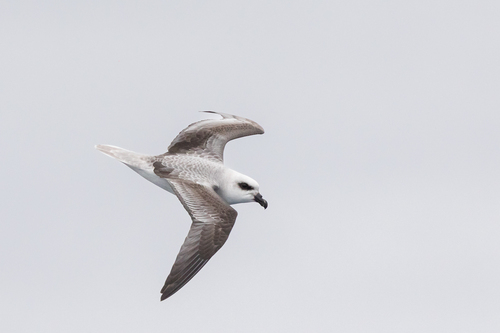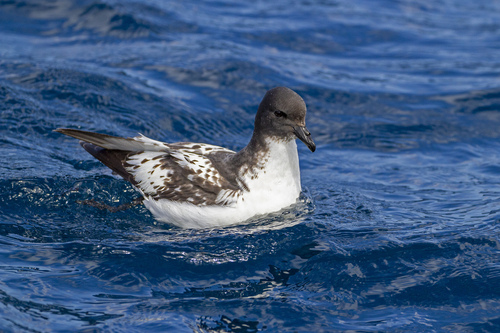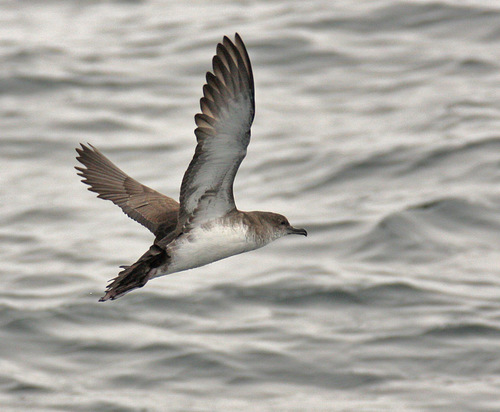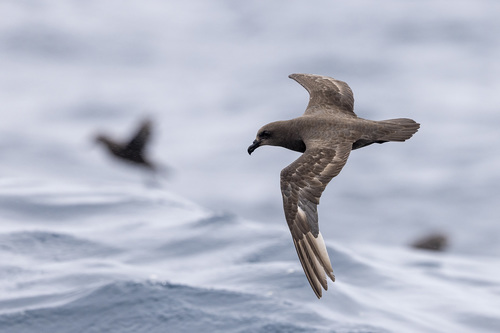
About Pterodroma solandri (Gould, 1844)
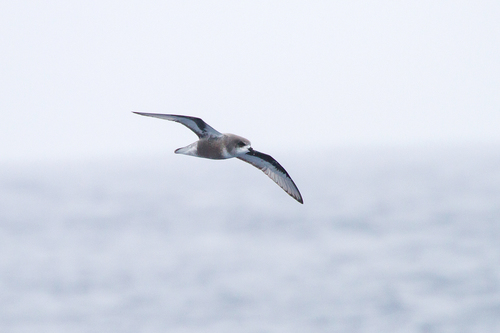
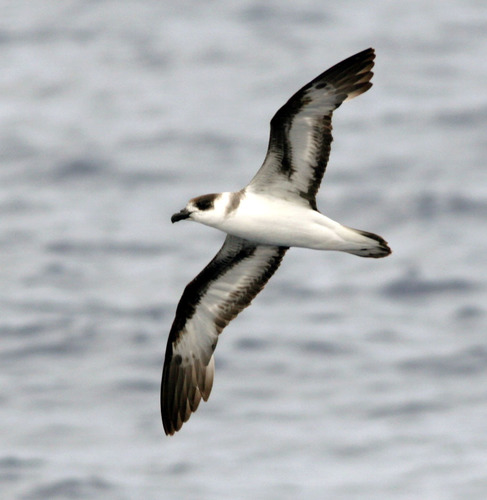
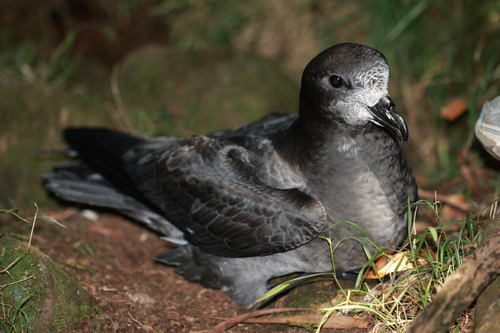
The providence petrel, also known by the alternative common name Solander's petrel, has the scientific name Pterodroma solandri. It is a large, heavily built gadfly petrel that currently nests at only two locations in the Tasman Sea: Lord Howe Island, around 800 km from the Australian mainland, and Philip Island. This species was named to honor Swedish botanist Daniel Solander.
Once abundant on Norfolk Island, an estimated one million providence petrels were harvested for food, and the species was completely extirpated from the island by 1800. It was also threatened by the introduction of mammalian predators in the late 18th century. This species is classified as Least Concern, but it is considered precarious because its breeding is restricted to two mountain tops and one tiny islet, leaving it at very high risk from a catastrophic event. In flight, the providence petrel is graceful and supple, but it moves very clumsily on the ground, which makes it vulnerable to predator attacks. The main causes of death for this species are predation by the endangered Lord Howe rail and flooding of its nesting burrows. Additional threats include rat predation and drowning in longline fishing gear. The current total global population is estimated at just 64,000 individuals. Over 99% of the global breeding population breeds on Lord Howe Island: approximately 32,000 breeding pairs nest on Mount Gower and Mount Lidgbird, with additional birds nesting on the lower slopes and Northern Hills of the island.
Diet and foraging behavior of Pterodroma solandri on Lord Howe Island, Australia, was studied over three consecutive breeding seasons. Its diet consists mostly of squid, predominantly from the families Cranchiidae, Onychoteuthidae, Spirulidae, and Histioteuthidae, and fish, mainly from the family Myctophidae. Crustaceans, primarily Decapoda and Isopoda, are a less important component of its diet. Some providence petrel populations are diurnal, while others are nocturnal. This difference may be caused by variation in foraging areas, or by historical predators that are no longer present in the species' range.