About Pterodoras granulosus (Valenciennes, 1821)
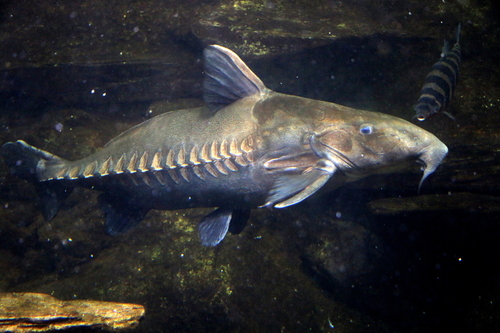
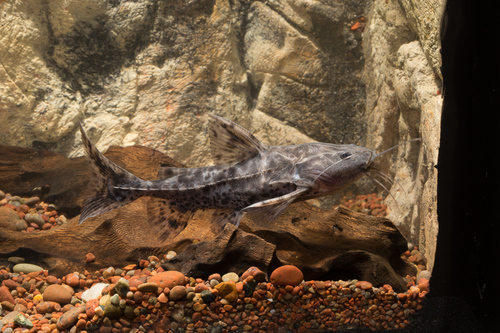
Pterodoras granulosus (Valenciennes, 1821) reaches a maximum total length of 70 centimetres (28 inches) and a maximum weight of 6.5 kilograms (14 pounds). The species' color pattern varies by the location it comes from, but most individuals are muddy-brown with darker spots spread across the body and fins. Adult individuals are darker than juveniles, and their characteristic spotting fades as they mature. This catfish has no scales, but its skin is thick and tough, and 23 to 28 shallow lateral bony plates called scutes run along the length of its body. Compared to the rest of the fish's body, its eyes are very small, and it has three simple pairs of barbels. It also has a deeply forked caudal fin, a trait that helps distinguish it from other large doradid catfishes.
In ecology, Pterodoras granulosus lives in small groups and is a nocturnal predator. It is an opportunistic omnivore with a broad food spectrum, feeding on vascular plants, mollusks, and other resources based on availability. This species has been recorded feeding on the introduced bivalve Corbicula fluminae, and may function as a form of biological pest control for this invasive species. There is evidence that Pterodoras granulosus plays an important role in seed dispersal, as seeds have been found in its stomach; seeds from the plant families Gramineae, Moraceae, and Polygonaceae are the most common types found in its stomach contents. Pterodoras granulosus is a migratory catfish species. Between March and July, there is little migration, and any movement that does occur is downstream. Upstream migration begins in August, intensifies in October, and reaches its peak in January.