About Pterocelastrus tricuspidatus (Lam.) Walp.
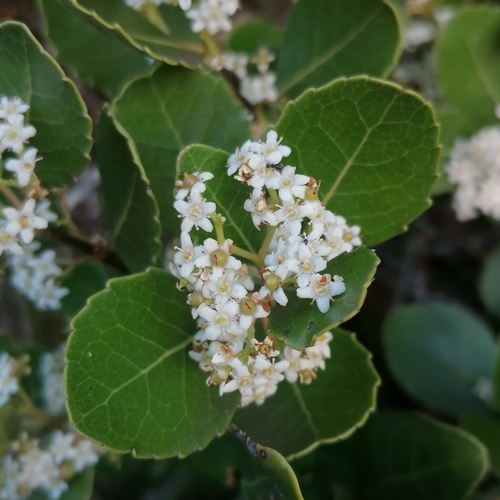
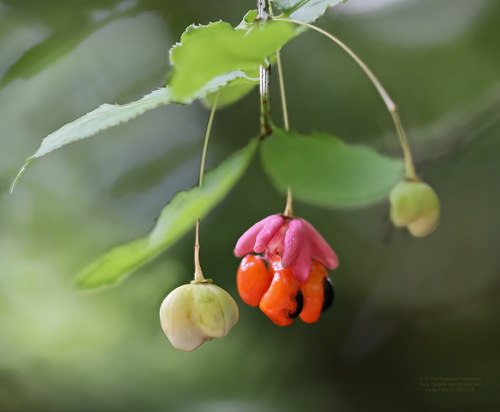
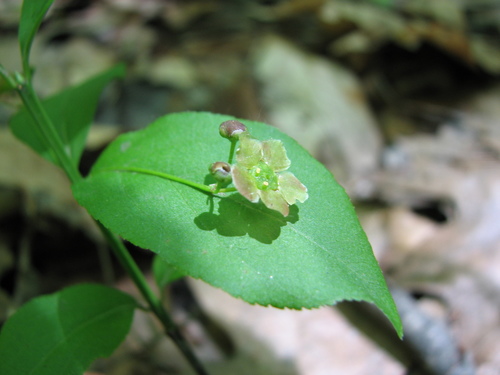
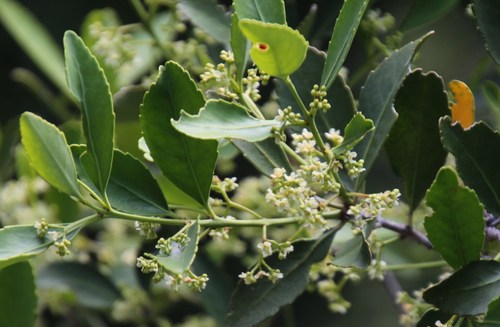
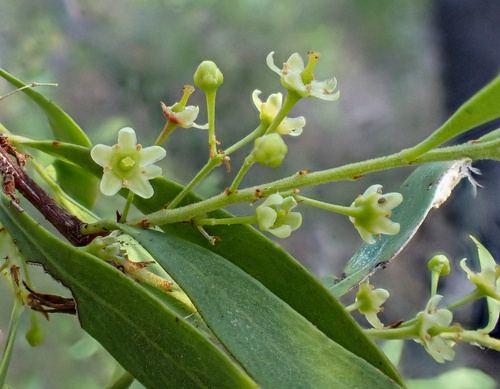
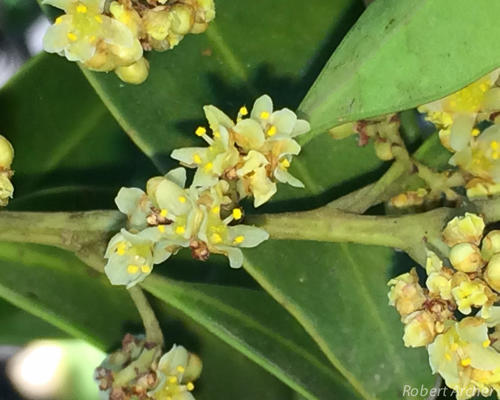
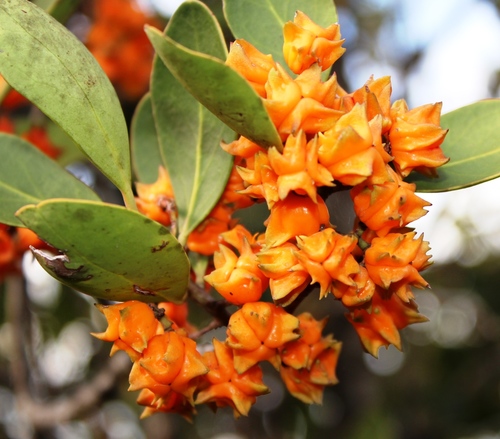
Pterocelastrus tricuspidatus, commonly called candlewood, often grows as a stunted bush in the wild, especially when growing in exposed positions. In favourable growing conditions, it can reach up to 10 meters in height and grow into a tree. It produces masses of sweetly scented flowers, which are followed by many very distinctive, attractive bright orange, lantern-shaped berries. Its young leaves are red, and mature to a glossy green colour. This species is indigenous to southern South Africa, where it naturally occurs from Cape Town in the west, along the entire south coast of South Africa to KwaZulu-Natal. Throughout its native range, it grows in most soil types, growing on sites from coastal sand and clay to rocky mountain slopes. In cultivation, candlewood can be pruned to grow as a proper shade tree. If its lower branches are not removed, it can instead be left to grow as a bushy screen. It grows particularly well in coastal conditions, though it can also grow inland. It is primarily cultivated as a coastal hedge, and grown ornamentally for its bright orange lantern-shaped berries, which attract birds. Once established, this tree tolerates drought and severe frost.