About Pterocarya stenoptera C.DC.
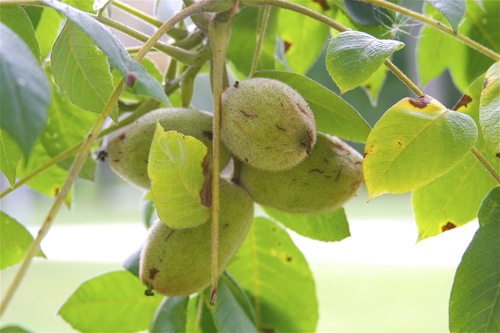
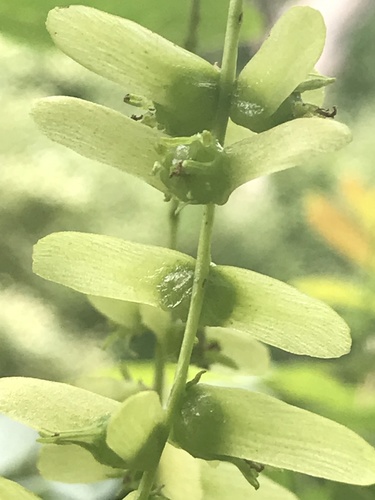
Pterocarya stenoptera C.DC. is very similar in appearance to Pterocarya fraxinifolia. Its main distinguishing feature is the shape of its fruit wings: these wings resemble the wings of a common fly, connect to both sides of a walnut-shaped fruit roughly the size of a chickpea, and sit in two different planes.
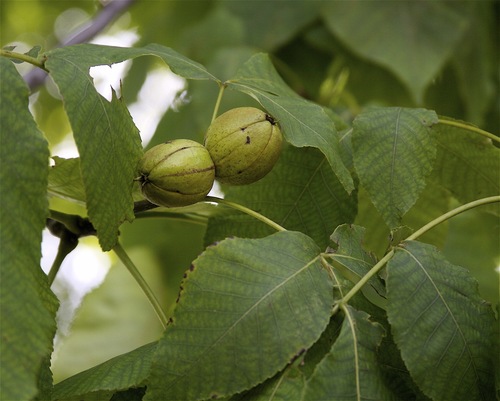
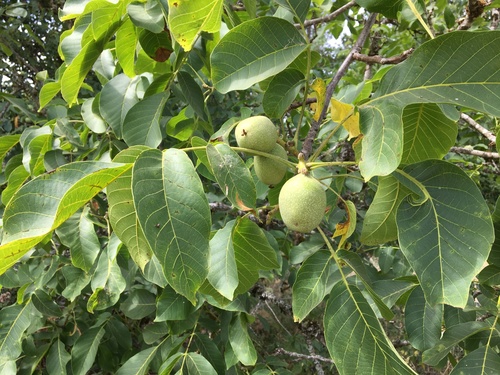
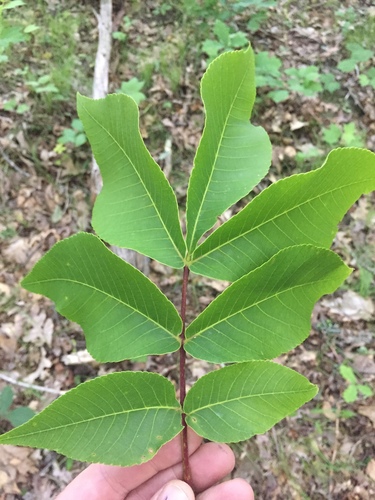
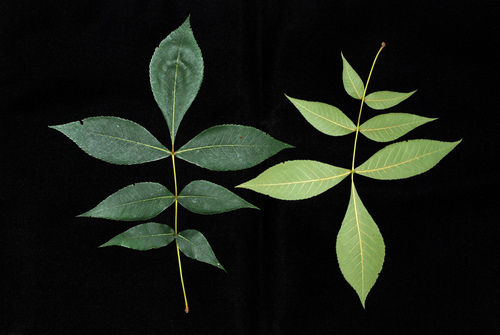
The fruits develop during summer on 25-centimeter long catkins that hang from the tree's green foliage, which has a distinctly unique texture. These fruiting catkins are often seen as desirable for landscaping purposes. Pterocarya stenoptera produces dense foliage, though this density can be reduced via pruning. Its leaves are alternate, deciduous, and pinnately compound, with an odd number of elliptic-oblong leaflets that have pinnate venation and serrated margins. The tree's trunk bark is similar to that of P. fraxinifolia, but is smoother in texture.
Under optimal growing conditions, this tree grows quickly, and can easily reach 70 feet in height with large, widely spreading branches. One individual tree cultivated in Raleigh reached 25 feet in height and gained a trunk diameter of 14 inches in just six years. Reported trunk diameters for mature specimens can reach as much as eight feet. The USDA designates this tree as suitable for growing in hardiness zones 6B through 11.
Its natural distribution and habitat includes mountain slope forests and riverbank forests, growing at elevations from near sea level up to 1500 meters. It is found naturally in Anhui, Fujian, Gansu, Guangdong, Guangxi, Guizhou, Hainan, Hebei, Henan, Hubei, Hunan, Jiangsu, Jiangxi, Liaoning, Shaanxi, Shandong, Shanxi, Sichuan, Taiwan, Yunnan, Zhejiang, Japan, and Korea. It is used in East Asian classical garden design.