About Pternistis bicalcaratus (Linnaeus, 1766)
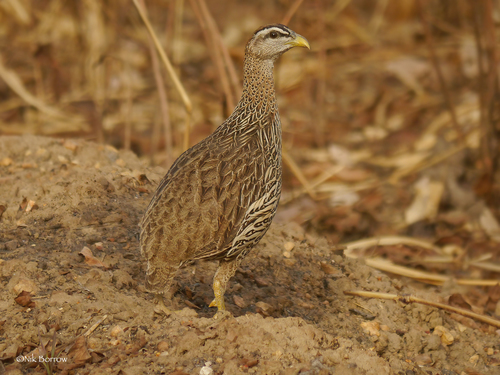
Double-spurred spurfowl, with the scientific name Pternistis bicalcaratus (Linnaeus, 1766), measures 30–34 cm (12–13 in) in total length. Adult males are primarily brown, with sparse darker and cream streaks and spots across their upperparts. Their chest and flank feathers are dark brown, with cream edges and central cream spots. The male’s face is pale cream, finely flecked with dark brown; its head has a chestnut crown and a white supercilium. Males also have a chestnut neck collar, white cheek patches, and brown wings. They most often have two spurs on each leg, with the upper spur being blunt, and their legs are dull green. Females look very similar to males, but they usually do not have spurs, and are slightly smaller and less robust. On average, males weigh around 507 g (17.9 oz), while females weigh around 381 g (13.4 oz). After completing their post-juvenile moult several weeks after hatching, young birds are almost identical to adult females. Males require several months to develop their spurs, and breeding is not likely to occur until birds reach their second year. This species occupies open habitats that contain trees. It builds its nest in a lined scrape on the ground, and lays a clutch of 5 to 7 eggs. The double-spurred spurfowl feeds on a wide variety of both plant matter and insects. It is a very unobtrusive species, and is most easily observed in spring, when males sing a mechanical krak-krak-krak call from a mound. It takes flight with the same explosive suddenness as a pheasant, but prefers to creep away out of sight instead of flying when disturbed.