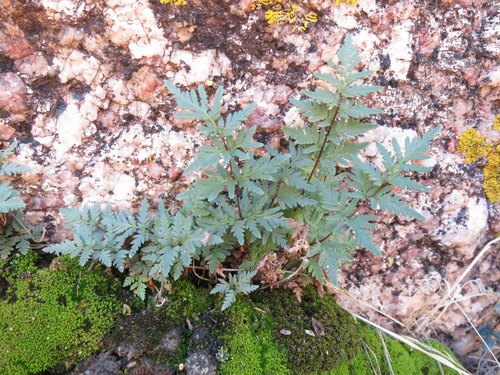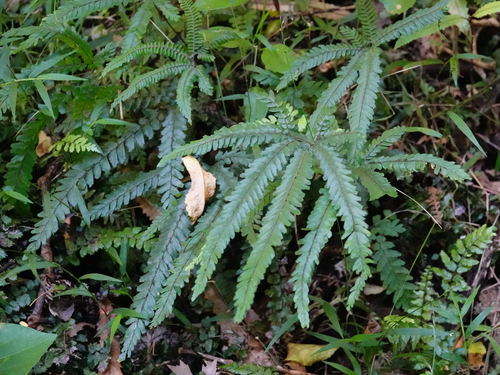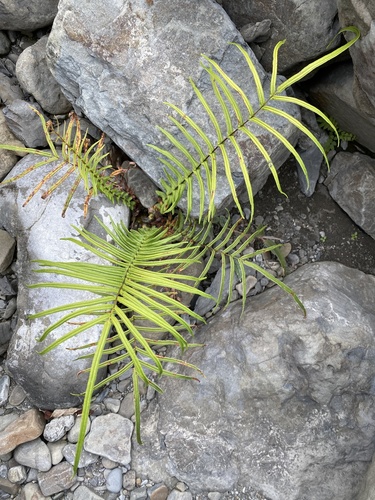
About Pteris vittata L.
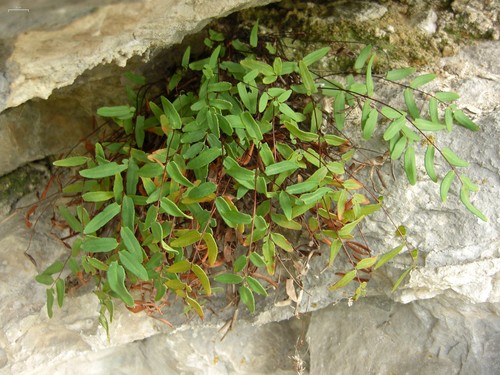
Pteris vittata L., commonly called Chinese brake, Chinese ladder brake, or simply ladder brake, is a fern species belonging to the Pteridoideae subfamily of the Pteridaceae. It is indigenous to Asia, southern Europe, tropical Africa, and Australia. Its type specimen was collected in China by Pehr Osbeck. This fern is native and widespread across the paleotropics. It occurs across eastern, southern tropical, and southern Africa, specifically in Angola, Kenya, Lesotho, Malawi, Mozambique, Namibia, Tanzania (including the Zanzibar Archipelago), South Africa (Cape Province, Free State, KwaZulu-Natal, and Transvaal), Eswatini, Uganda, Zambia, and Zimbabwe. In temperate and tropical Asia, it is found in the Chinese provinces of Anhui, Gansu, Guangdong, Guangxi, Guizhou, Hubei, Jiangxi, Sichuan, Xizang, and Yunnan; the Japanese prefectures of Honshu, Kyushu, Shikoku, and the Ryukyu Islands; and Thailand. In Australia, it grows in the states of New South Wales, Queensland, Victoria, and Western Australia. A remnant population of Pteris vittata can be found on the Italian peninsula, in Sicily, Calabria, and Campania. The species is often associated with limestone habitats, and it can also be seen growing on concrete structures and in cracks within buildings in Sydney’s central business district and suburbs. It has been introduced as an exotic species to California, Texas, and the Southeastern United States. While it grows readily in the wild, Pteris vittata is sometimes cultivated. It is grown in gardens for its attractive appearance, and it is also used in pollution control projects: it is known to be an arsenic hyperaccumulator, and is used for phytoremediation.