About Pteris cretica L.
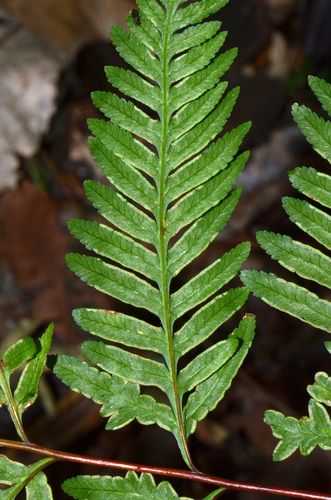
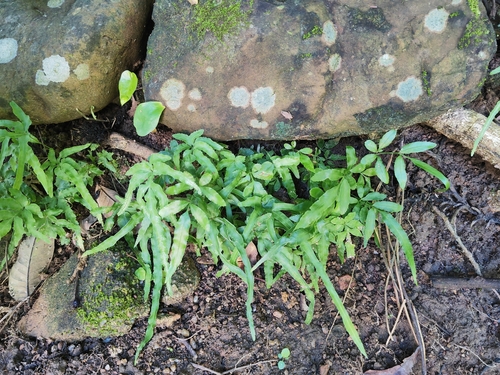
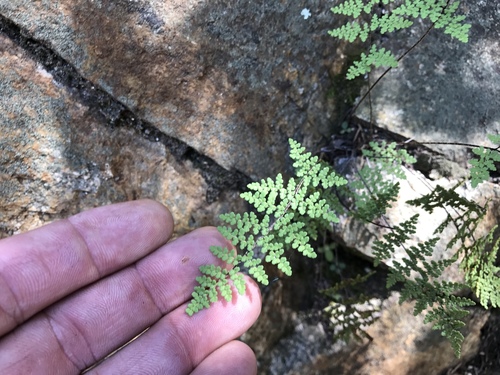
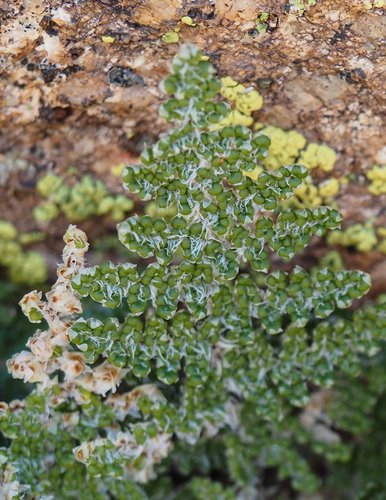
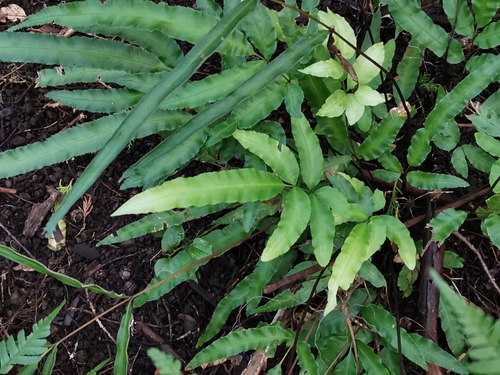
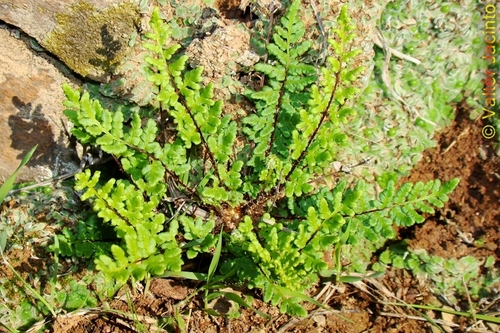
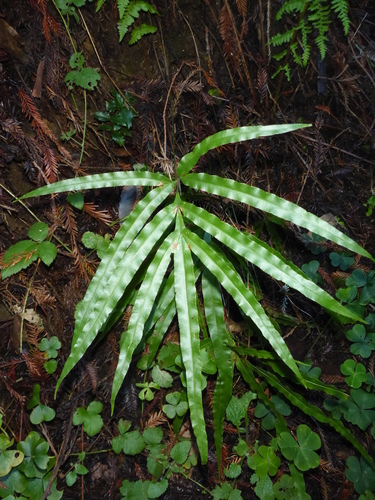
Pteris cretica L. is a fern that grows up to 75 cm (30 inches) tall and 60 cm (24 inches) wide. It produces arching pinnate fronds, each of which bears up to five pinnae. The nominotypical subspecies Pteris cretica subsp. cretica is native to a range extending from the Mediterranean to tropical Asia, Africa, Madagascar, and the Atlantic islands. Specific native locations include Gran Canaria, Spain, France, Corsica, Sardinia, Sicily, Italy (Lake Como and Lake Garda), Switzerland (Ticino, on the shores of Lake Lugano and Lake Maggiore), Crimea, Greece, Transcaucasia, Turkey, and Lebanon-Syria. Contrary to its scientific name, Pteris cretica does not actually occur on Crete. In Africa, it is native to Yemen, Socotra, Algeria, Ethiopia, Angola, Kenya, Burundi, Rwanda, Malawi, Tanzania, Zambia, Democratic Republic of the Congo (formerly Zaire), Zimbabwe, Lesotho, Eswatini (formerly Swaziland), South Africa, and Madagascar. In Asia, it occurs in Sri Lanka, India, Assam, Pakistan, the Himalaya, Nepal, Bangladesh, Tibet, China (North-Central, South-Central, Southeast China), Myanmar, Cambodia, Japan, Korea, Laos, Thailand, Vietnam, Taiwan, Nanshoto, the Philippines, Ascension Island, and Réunion. Pteris cretica is an introduced neophyte that has spread through the Americas from the USA, via Mexico, Central America and the Caribbean Islands, to Colombia and Peru. It is also established as a neophyte in Hawaii, New Zealand, Australia, the Azores, Great Britain, Hungary, and the Netherlands. The second recognized subspecies, Pteris cretica subsp. laeta, is native to a range from East Turkey to tropical and subtropical Asia and the Indian subcontinent. Its native locations include Afghanistan, Assam, Cambodia, South-Central China, Southeast China, East Himalaya, India, Iran, Japan, Laos, the Lesser Sunda Islands, Myanmar, Nepal, Pakistan, the Philippines, Sri Lanka, Sulawesi, Taiwan, Thailand, Tibet, Transcaucasus, Turkey, Vietnam, and West Himalaya. Pteris cretica is widely cultivated by plant nurseries. It is grown in-ground in gardens, as a potted plant, and as a common houseplant. A variegated foliage cultivar, Pteris cretica var. albolineata, is also widely cultivated, valued for brightening shaded garden areas. Both the species and the variegated variety grow year-round outdoors successfully in subtropical climates, such as that of California. With a minimum tolerated temperature of 2 °C (36 °F), both require protection from frost. The unvariegated species is hardier than the variety, and can be grown outdoors during the summer months in cold climates. Both the original species and P. cretica var. albolineata (treated as a synonym of P. nipponica) have been awarded the Royal Horticultural Society's Award of Garden Merit. A relictual population of the fern has been recorded in Ponte Terra gorge, San Vittorino, Rome, in the Lazio region of the Italian peninsula.