About Pteridium esculentum subsp. arachnoideum (Kaulf.) J.A.Thomson
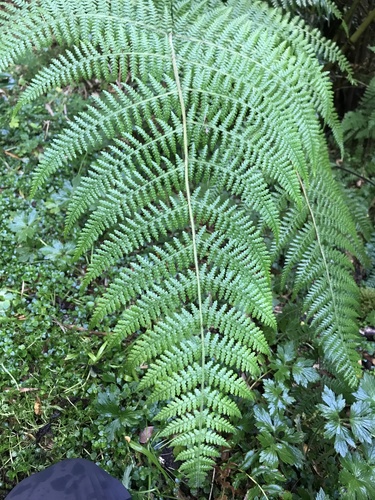
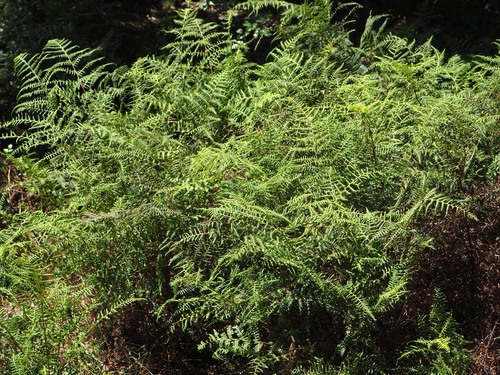
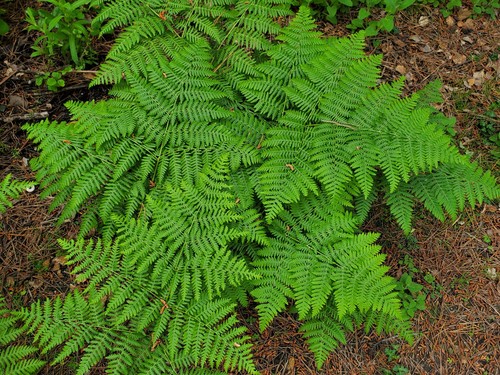
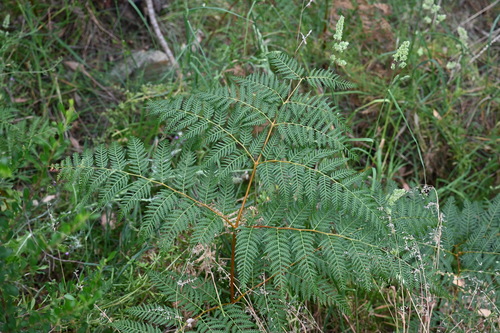
This taxon is Pteridium esculentum subsp. arachnoideum (Kaulf.) J.A.Thomson. Pteridium esculentum grows from creeping rhizomes covered in reddish hair. Single large, roughly triangular fronds grow from these rhizomes, reaching 0.5 to 2 metres (1 ft 8 in to 6 ft 7 in) in height. The fronds are stiff with a brown stipe. This subspecies is distributed across all Australian states except the Northern Territory, and also occurs in New Zealand, Norfolk Island, Malaysia, Polynesia, and New Caledonia. Within Victoria, Australia, it is widespread and common up to altitudes of 1,000 m (3,300 ft). In New South Wales, it grows across the central, eastern and southern parts of the state. In Western Australia, it grows near the southern and western coastlines, extending as far north as Geraldton. It can act as a weed, invading and colonizing disturbed areas. Like its Northern Hemisphere relatives, P. esculentum colonizes disturbed areas very quickly, and can outcompete other plants to form a dense understorey. It is often classified as a weed. It creates a more humid, sheltered microclimate under its fronds, and acts as a food source for a variety of native insects. A field study conducted near Sydney, Australia recorded two species of Drosophila fruit fly on this plant. Another study near Sydney found 17 species of herbivorous arthropods associated with the plant, including 15 insects and two mites. A notable observation from this study was the absence of Hymenoptera (ants, bees, wasps, and sawflies) and beetles.