About Psylliodes chrysocephalus (Linnaeus, 1758)
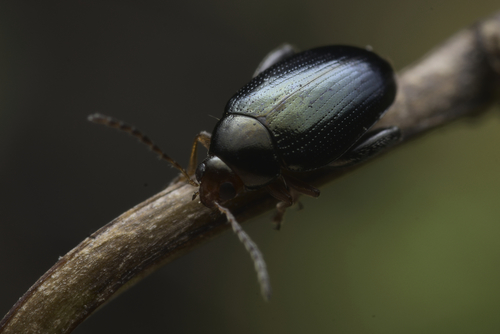
Psylliodes chrysocephala (Linnaeus, 1758) measures 3.0–4.0 mm in length. Its body colour varies, but most individuals are dark metallic blue. Like all flea beetles, it has large hind femora that allow it to jump; these femora are orange-red with darkened areas. This species can be distinguished from other members of the genus Psylliodes by three key features: its pronotum lacks anterior angles, the punctures on the top of its head are as coarse as the punctures on its elytra, and its first fore tarsal segment is equal in length to its third fore tarsal segment. This species is native to the Western Palaearctic, including Macaronesia, Cape Verde, and North Africa, and it has been introduced into Canada. Psylliodes chrysocephala can be found in a variety of habitats, determined by the presence of its host plants. It is specifically associated with wild and cultivated plants in the family Brassicaceae. Confirmed host plants include Brassica napus, Brassica nigra (black mustard), Brassica oleracea (cabbages, cauliflowers), Brassica rapa (turnip rape), Nasturtium officinale (watercress), Raphanus sativus (radish), Sinapis alba (white mustard), Sinapis arvensis (wild mustard), and Tropaeolum majus (common nasturtium).