About Psoralea fascicularis DC.
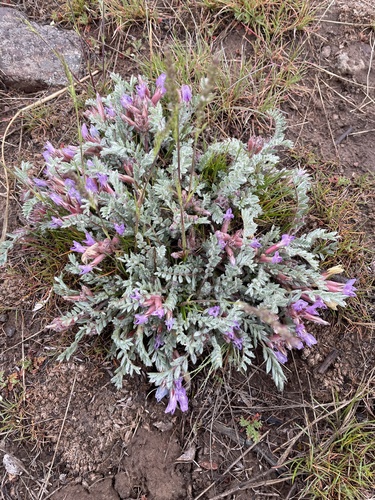
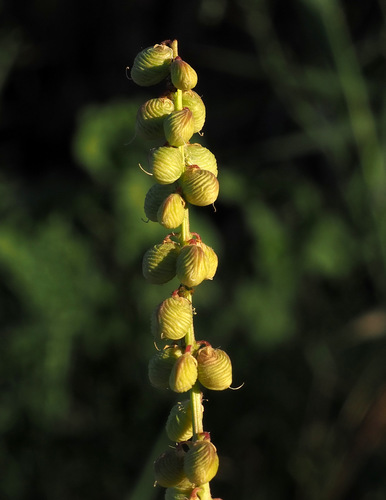
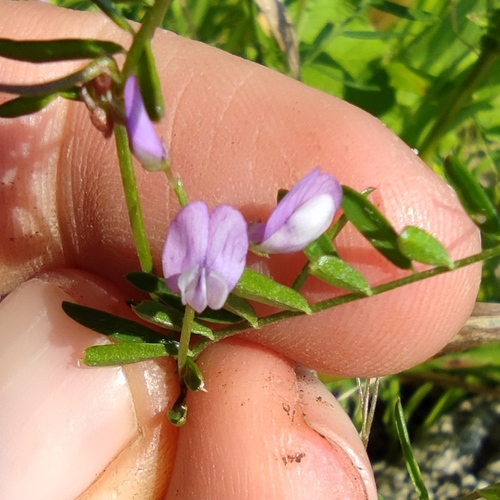
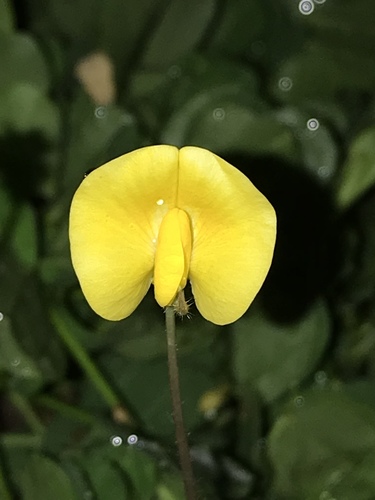
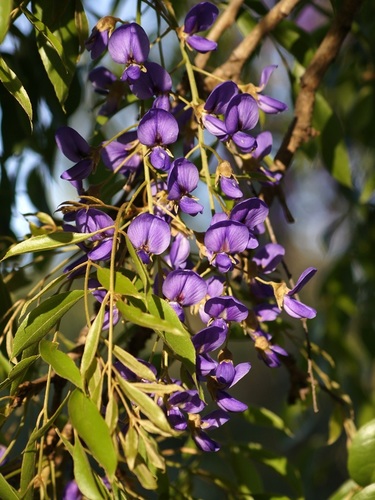
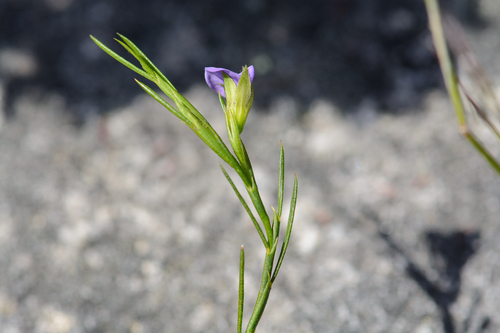
Psoralea fascicularis DC. is a small, low-growing resprouting perennial sub-shrub. It produces long, incurved branches that are densely covered in leaves. Its leaves are hairless (glabrous), tri-foliate, with narrowly lanceolate leaflets that taper to an unusually sharp point. Conspicuously large stipules grow at the base of each leaf stalk, which gives the species its common name large-stipule fountainbush. Its inflorescences are arranged loosely in rounded clusters along the stem; the flower stalks (pedicels) are long, grow from leaf axils, and are clustered along the shoot in groups of several. The small flowers are indigo in color; the upper banner petals each have two adjacent white spots at their center. The wing petals are often much longer than the keel and standard petals. This species flowers from September to December.
This species is endemic to the Western Cape province of South Africa, where it occurs in only a few locations, ranging from the Cape Peninsula in Cape Town to the Shaw's Mountains east of Hermanus. It is most famously found in the Stellenbosch-Jonkershoek area, which includes the Hottentots Holland Mountains. It most commonly grows in moist areas within mountain fynbos, lowland fynbos, and renosterveld.
While the bioactive compounds and mechanism of action of Psoralea fascicularis have not yet been studied, this species has been reported to be toxic to horses and cattle, so it is not used as livestock fodder. Psoralea species as a group are thought to have broad potential for treating various diseases and ailments, so further conservation of these species is considered essential to prevent excessive overexploitation before research can be conducted.