About Psophocarpus tetragonolobus (L.) DC.
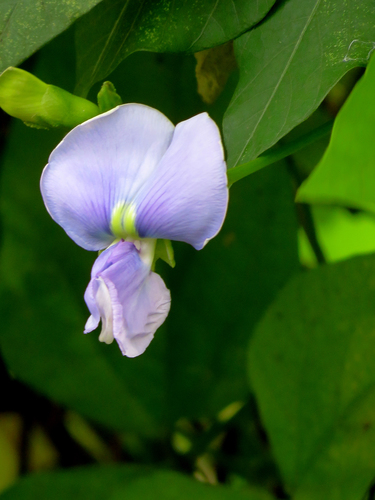
Psophocarpus tetragonolobus, commonly known as the winged bean, is a climbing vine that reaches 3 to 4 meters (10 to 13 feet) in height. It is an herbaceous perennial, though it can also be grown as an annual. It is generally taller and notably larger than the common bean. Its leaves can grow up to 15 centimeters (6 inches) long, and range in shape from ovate, deltoid, and ovate-lanceolate to lanceolate and long lanceolate. The shade of green of its leaves also varies between individual plants. Its stem is most commonly green, but occasionally purple. Its large flowers are pale blue. The bean pods can be smooth or rough depending on the plant's genotype. They are typically 15 to 22 centimeters (6 to 8+1⁄2 inches) long, rectangular in cross-section (though they sometimes appear flat), and have four frilly-edged wings that run lengthwise along the pod. Young pods have waxy skin and partially translucent flesh, and can be colored cream, green, pink, or purple. When fully ripe, pods turn ash-brown and split open to release their seeds (beans). Seeds are most often round, but can also be oval or rectangular. Their color ranges from white and cream to dark tan and brown, depending on growing and storage conditions. In both use and nutritional content, winged beans are similar to soybeans, with a protein content between 29.8% and 39%. The species is most likely native to New Guinea, and grows abundantly in hot, humid equatorial countries of South and Southeast Asia, as well as tropical Africa. It is widely known in Southeast Asia and Papua New Guinea, but is only cultivated on a small scale. It is typically found in open areas and old garden sites, and occurs less often in forests.