About Psittacula longicauda (Boddaert, 1783)
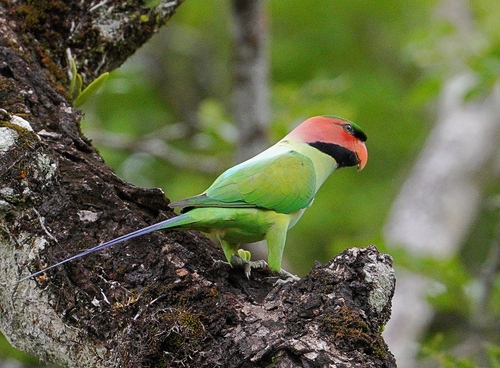
Psittacula longicauda, the long-tailed parakeet, is mainly green with a long blue tail. Males have a black cap and red on the cheek or face; females lack the black cap and have less red on the cheek. This species can live in a wide variety of habitats, including swamp forests, lowland evergreen forest, oil palm plantations, coconut plantations, gardens, and public parks. It is a frequent visitor to agricultural areas, especially those that produce tropical fruits and seeds, and is usually found at elevations up to 300 metres (980 ft). The long-tailed parakeet is an extremely social bird, always found interacting with other members of its own species. Though small groups are most commonly seen, flocks of thousands have been recorded on the Andaman Islands and Borneo, and these large flocks typically form during the breeding season. It is a colony breeder. Populations on the Malay Peninsula generally breed from December to February, while populations on the Nicobar and Andaman Islands breed from February to March. Females lay a clutch of 2 to 4 eggs that measure approximately 30.5 x 24.5mm. Eggs take about 23 to 24 days to hatch, and chicks fledge at around 7 weeks old. Its diet includes a variety of berries, papaya, areca nuts, a wide range of cultivated and wild fruits, seeds, and cultivated grains such as corn. It is a curious species, often observed playing with sticks or other materials found in its environment. Like other members of the Psittacidae family, this species nests in high tree trunks.