About Psilorhinus morio (Wagler, 1829)
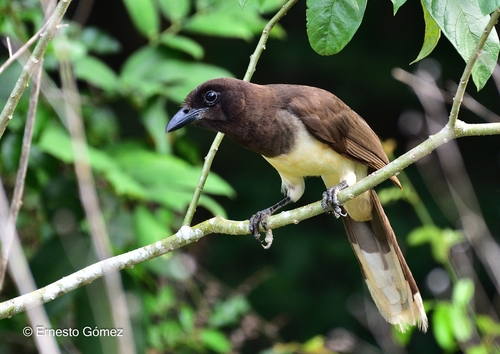
Psilorhinus morio, commonly known as the brown jay, shows geographic variation in plumage that divides the species into two main groups. Northern populations consist of almost completely dark brown birds, with lighter brown coloration on their underparts. Southern populations are white-bellied and have bright white tips on their outer tail feathers. An intergrade zone between the two groups occurs in Veracruz, Mexico. Adults from both populations have black bills, legs, and feet. Immature brown jays have yellow bare body parts, including yellow eye-rings. Brown jays produce a loud, low-pitched pee-ah call, which they often modify to match their current situation or mood. The northernmost edge of the brown jay's range lies in the lower Rio Grande Valley of Texas, near the border with Mexico. From Mexico, the species ranges south into Central America. In Mexico, brown jays occur widely across the eastern and southeastern parts of the country. In Central America, they are widespread on the Gulf slope from Belize south to western Panama. They are scarcer on the Pacific slope; in El Salvador, they are restricted only to the far northeast of Morazán Department, near the border with Honduras. Brown jays forage for food mostly in trees, though they also collect some food from the ground. They are relatively indiscriminate feeders. Their diet includes insects, a wide variety of other invertebrates, lizards, nectar, and fruit, for example fruit from Trophis racemosa, a member of the mulberry family Moraceae. While brown jays will eat the eggs and nestlings of other birds, they generally do not do so when plenty of alternative food is available. Both the male and female brown jay help construct the nest, which is built in a tree or large shrub. Clutches normally contain three eggs, but clutches of up to six eggs are not uncommon. Incubation lasts between 18 and 20 days. Only the female broods the eggs, but the male feeds her while she broods. Sometimes offspring from a previous breeding season will help the breeding pair raise the current season's chicks. When a helper bird brings back food, it gives the food to one of the resident parent birds to feed the chicks.