About Psilopogon chrysopogon (Temminck, 1824)
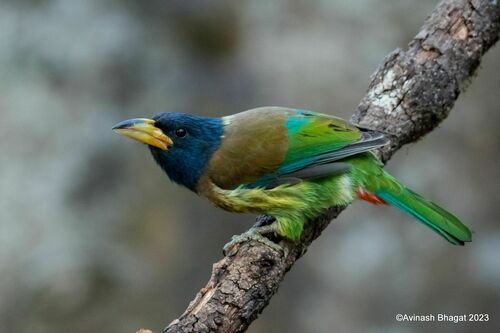
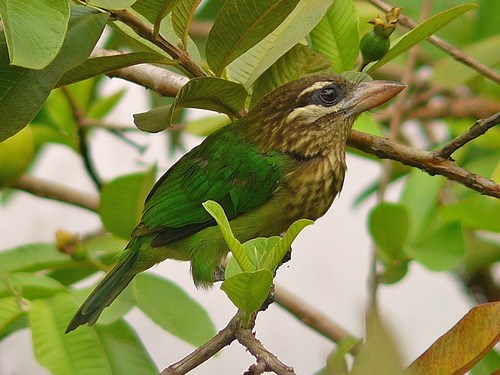
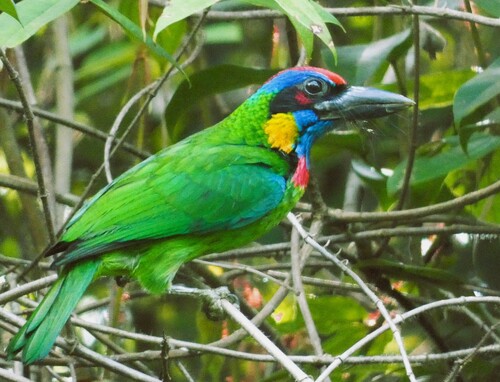
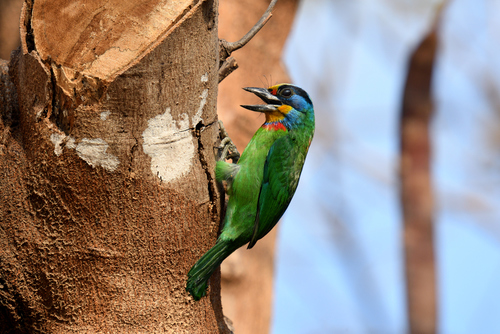
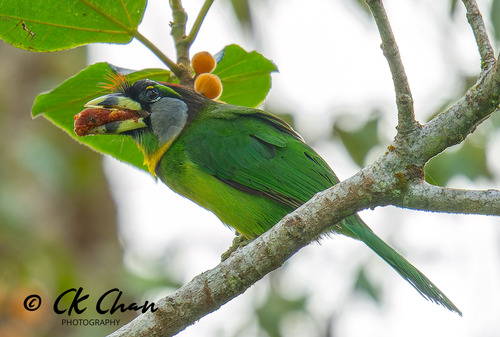
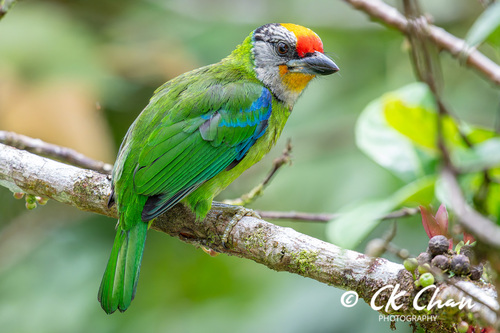
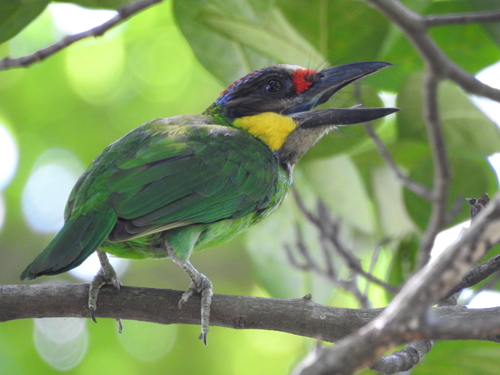
The golden-whiskered barbet, scientifically named Psilopogon chrysopogon (Temminck, 1824), has green plumage in a range of different hues. It has a yellow moustache marking on both sides of its black beak, and this marking extends to the ear canal. Its throat is blue, it has small blue and red spots on its head, and blue markings surround its eyes. Its forecrown is pale yellow, and there are red patches on both sides of its beak. The species measures 30 cm (12 in) in length and weighs between 110–215 g (3.9–7.6 oz). Males and females are similar in appearance, but show a small degree of sexual dichromatism: females have paler beaks with a dusky bluish color. Immature birds of both sexes have duller overall plumage before they reach maturity. The golden-whiskered barbet's range extends from the Malay Peninsula to Sumatra and Borneo. It lives in tropical and subtropical moist broadleaf forests as well as montane forest. It has also been observed in cacao plantations and second growth forests, but it is rare in evergreen and swamp forests. This barbet spends most of its day in the forest canopy. It forages mainly for figs and berries. Since it has been observed picking at dead wood, researchers assume it also searches for insects. Its song consists of a series of 'too-tuk' notes, and it sings during breeding even when daytime temperatures are high. Its breeding season runs from February to August, and it lays two eggs per clutch.