About Psilocybe weraroa Borov., Oborník & Noordel.
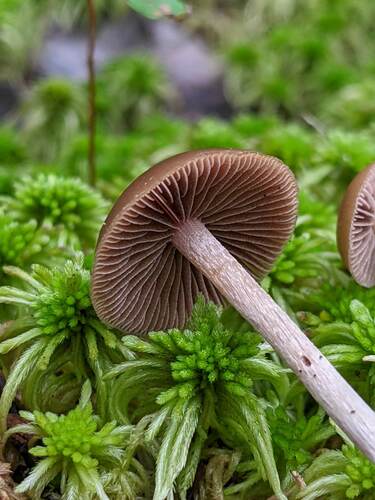
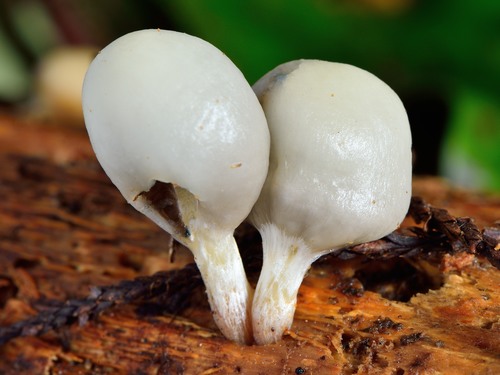
The pileus, also called the peridium, of Psilocybe weraroa measures 3–5 cm (1.2–2.0 in) long by 1.5–3 cm (0.59–1.18 in) wide. It is generally roundish, ovate (egg-shaped, wider at the base and tapering toward the tip) or elongated and elliptic (tapered at both the base and apex, with a swollen middle section). The base is either decurrent (extending down the stipe below the point of attachment) or rounded and blunt, while the margin is folded and often torn. When young, the pileus is light brown; as it ages, it becomes French grey or pale blue-grey, and occasionally turns pallid green. It has longitudinal fibrils that give it a finely striated appearance, and becomes smooth, polished, glabrous, tacky, and leathery with age. When injured, it slowly bruises blue or greenish, and dries to a yellow to dingy brown color.
The stipe grows up to 40 mm (1.6 in) long by 6 mm (0.24 in) in diameter. It is slender, equal in width along its length, and ranges from whitish to French grey. It bruises blue or greenish when damaged, and is yellowish-brown at the base. Initially it is fibrillose, but becomes smooth, polished, and cartilaginous with age except at the base; it is hollow, with yellow-orange flesh that thickens at the inner apex.
The gleba is sepia-brown to chocolate-brown. It is cellular, coarsely shaped, often elongated, laterally compressed, sparse, chambered, and gill-like. Spores measure 11–15(17) x 5–8 μm, are smooth, sepia-colored to purple-brown, elliptic-ovate or elliptical in shape, rounded at one end, and have a thin epispore.
This species is endemic to New Zealand. It is fairly abundant during early winter and spring in lowland mixed rainforest near Wellington and Auckland. The mushrooms can be difficult to spot, as they are often buried under leaves or eaten by slugs, and it can be hard to find intact mature specimens. Psilocybe weraroa typically grows on decaying wood buried in forest leaf litter, growing either solitary or in crowded clusters. It often grows on the rotting branches of Melicytus ramiflorus, and has also been recorded fruiting on rotted cabbage trees, in association with decaying native New Zealand tree-fern fronds.
One ecological hypothesis states that this species evolved its pouch-like fruitbody structure as a strategy to be eaten by the extinct flightless moa. The structure disguises the fungus' fruitbodies as fallen berries, allowing spores to be dispersed to new areas.