About Pseudothelomma occidentale (Herre) M.Prieto & Wedin
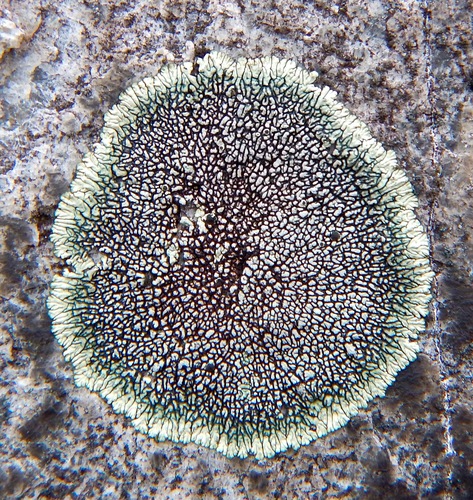
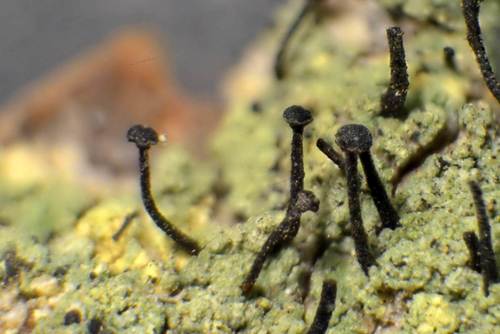
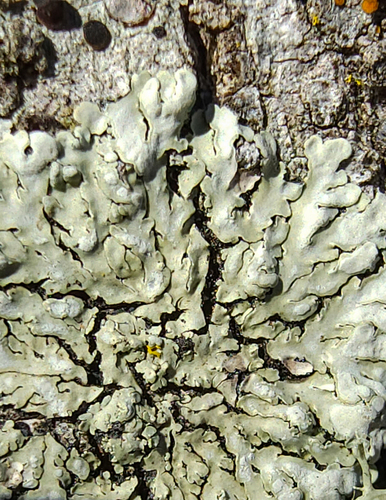
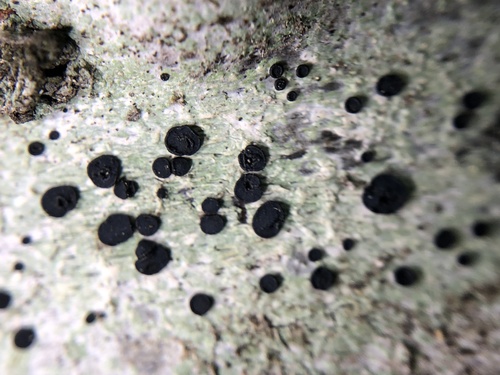
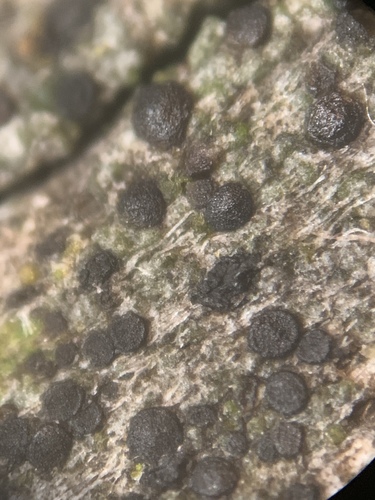
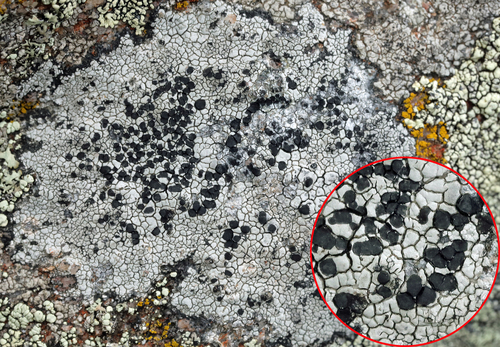
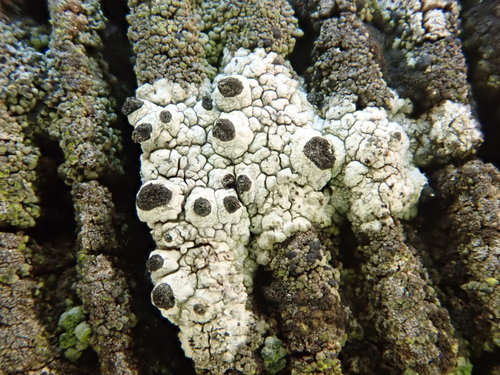
Pseudothelomma occidentale is a corticolous (bark-dwelling), crustose lichen that belongs to the family Caliciaceae. Albert William Herre first formally described this species in 1910, initially placing it in the genus Cyphelium. In 1976, Leif Tibell moved the species to the genus Thelomma. Finally, María Prieto and Mats Wedin transferred the taxon to the newly created genus Pseudothelomma in 2016. Before Herre officially described it as the new species Cyphelium occidentalis, Hasse identified the lichen as an Acolium species in 1902. Herre described the thallus as determinate, forming rounded or oval patches, or spreading widely. It is made up of thick areoles covered in many small nodules, which creates a deeply fissured, chinky crust that is whitish or ashy-grey. The thallus does not react to KOH or CaCl2 chemical spot tests. The apothecia grow embedded in swollen warts, and range in size from small to large. They have a black disc and a thick, white margin that is often concealed. Herre noted several distinctive microscopic features: distinctly long, slender paraphyses, a broader thecium base marked by a wide brown-black band, and oblong-ellipsoid bilocular spores that are strongly constricted. Herre reported that this species originally grew on old wooden fences in mountainous and foothill regions; by the time of his original description, these original habitats had been replaced by wire fencing. When touched, the lichen leaves black marks on the fingers, a characteristic it shares with other species that were originally placed in the genus Cyphelium.