About Pseudotelphusa paripunctella (Thunberg, 1794)
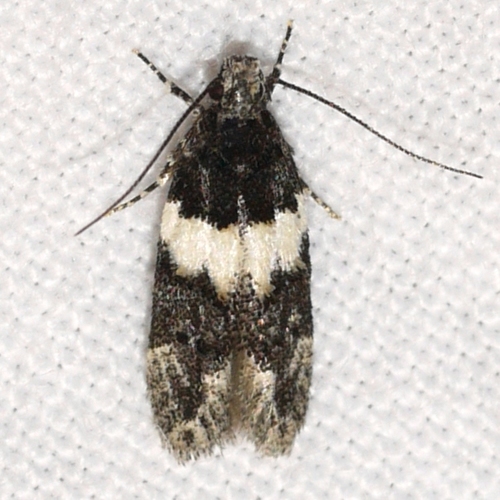
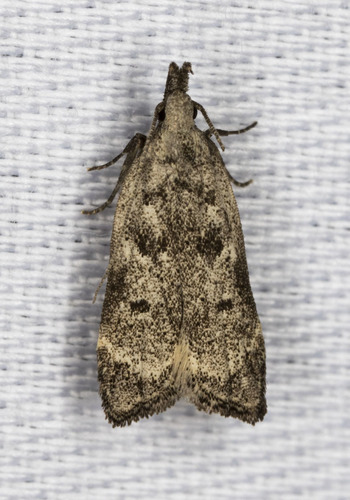
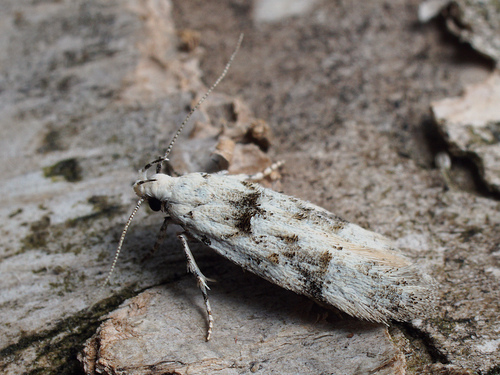
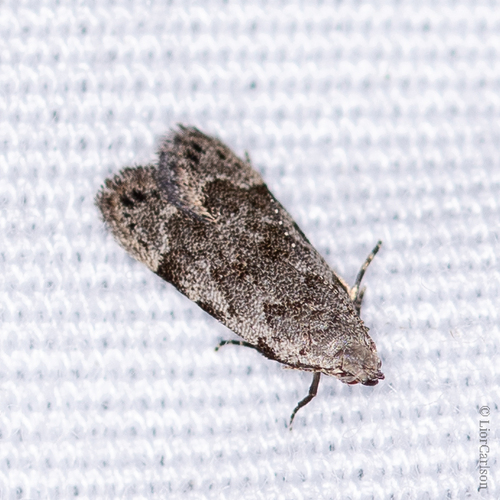
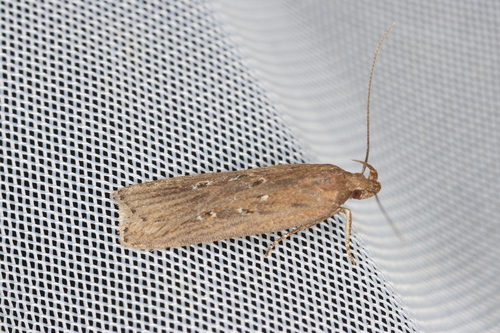
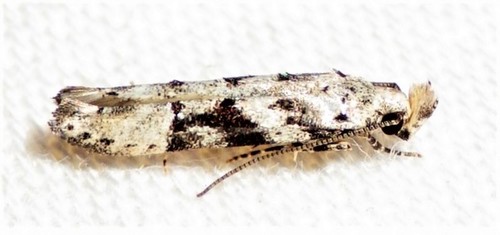
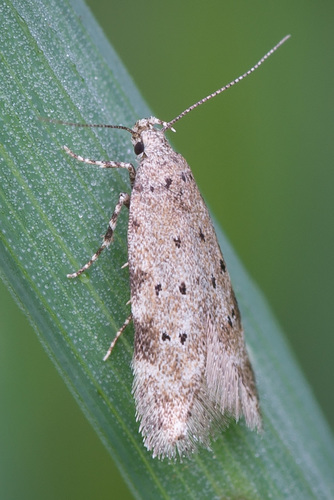
Pseudotelphusa paripunctella is a moth species that belongs to the family Gelechiidae. This species is distributed across most of Europe, extending eastward to Siberia and the Caucasus. The wingspan of adult moths ranges from 9 to 16 mm. The head is colored whitish-ochreous. The terminal segment of the labial palpi is shorter than the second segment. The forewings are whitish ochreous, with partial suffusion of pale brownish-ochreous. Black scales are typically present on a basal spot, on two or three costal marks, and around the terminal margin within the cilia. Two black dots are positioned transversely in the disc at one-quarter of the forewing length. The stigmata are black; the first discal stigma sits above the plical stigma, and an additional black dot is located below the second discal stigma. Hindwings are light grey, with vein 1 present. Fully grown larvae are yellowish-green with black dots and a pale brown head. Adult moths are active between May and June. Larvae feed on a variety of deciduous trees and shrubs, including species of Myrica gale, Hippophae rhamnoides, Fagus, Betula, and Quercus. Larvae feed while sheltered within leaves that they have spun together. This species overwinters in the pupal stage.