About Pseudoscleropodium purum (Hedw.) M.Fleisch.
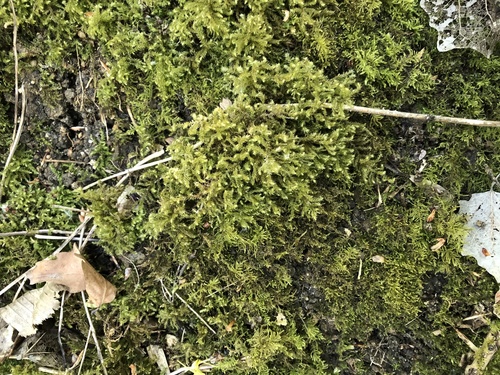
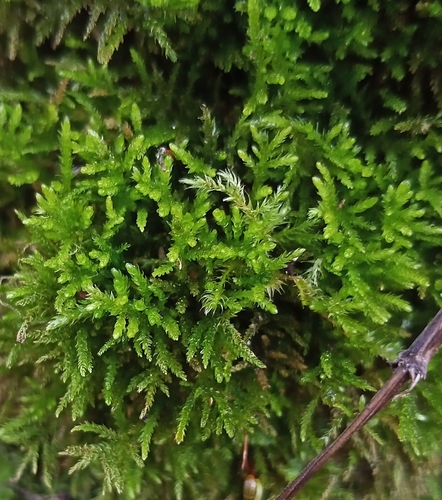
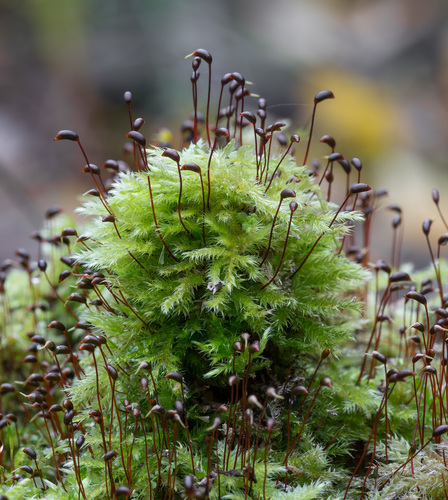
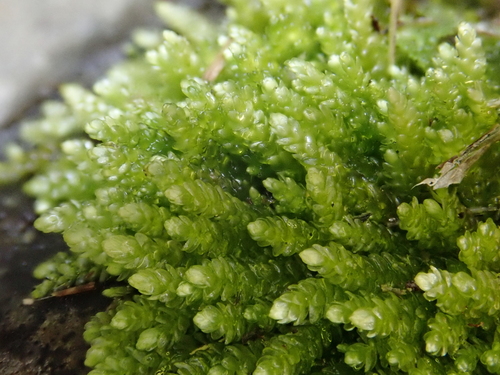
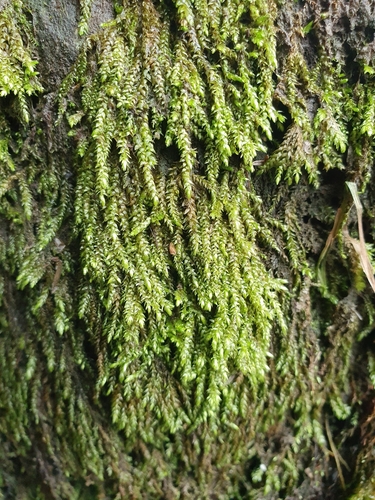
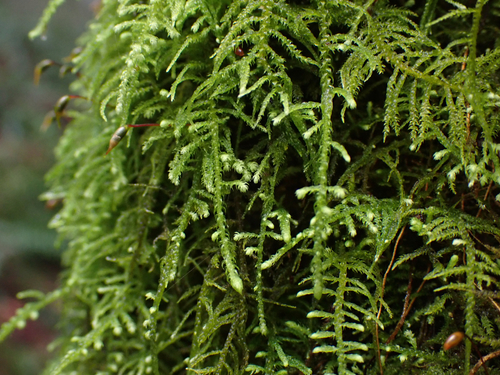
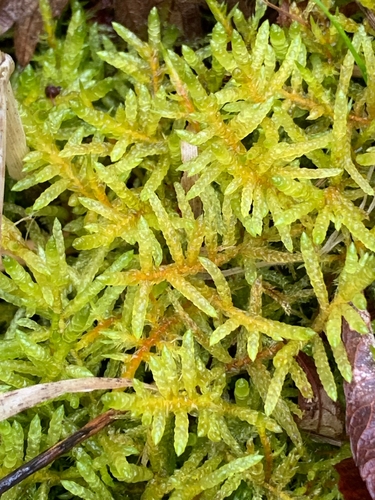
Pseudoscleropodium purum (Hedw.) M.Fleisch. has a pleurocarpous growth habit, forming soft carpets or turfs. It produces regularly pinnate shoots up to 15 cm long; branching may become irregular when it grows on disturbed sites such as mowed lawns. Its branches are usually 1 to 3 cm in length, and shoots have a swollen appearance that is especially pronounced when moist. Its leaves range from yellow-green to dark green, are broadly ovate, are distinctly recurved at the tip, and have a single costa that extends to the middle of the leaf. Stem leaves measure 2 mm to 2.5 mm in length, while slightly smaller branch leaves measure 1 to 2 mm in length. This moss mainly propagates vegetatively, and sporophytes are rarely observed. When present, the seta is relatively long, ranging between 2 and 5 cm, and no sporophytes have been recorded in North America. The original native range of this species is not confirmed, but it is classified as a European moss. The uncertainty around its original range makes it very difficult to classify populations as exotic or invasive within continental Europe. Outside of continental Europe, it has been recorded in the British Isles, Iceland, the Azores, Madeira, the Canary Islands, Jamaica, Hawaii, Chile, New Zealand, Southeastern Australia, St. Helena, as well as scattered areas of North America and Asia; it is considered non-native in all these locations. In natural settings, it occurs at low to moderate elevation across a range of habitats including acidic and calcified grasslands, heaths, banks, among rocks and on rock ledges. It is a typical forest floor moss, and is especially characteristic of young reforested areas. While it can grow in open woodland, it is not particularly shade tolerant. A New York-based study consistently found this species growing in association with several trees, specifically standalone or small groves of Picea abies and Thuja occidentalis. It grows well in the area directly under tree canopies, but flourishes when leaf litter is sparse or completely absent. It is often found in areas of high human activity and disturbance, growing primarily in urban lawns, cemeteries, forest edges, roadsides, and among discarded lawn clippings. On the Pacific coast, it is considered a troublesome lawn weed.