About Pseudopus apodus (Pallas, 1775)
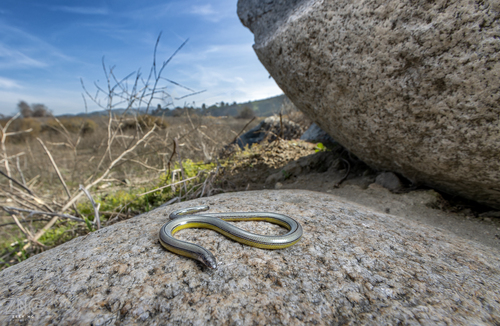
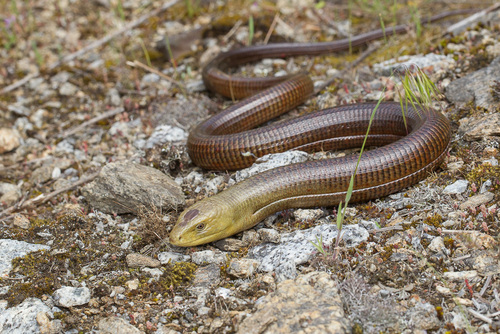
This species, commonly called the sheltopusik, can reach a total length of 135 cm (4.43 ft). Its base coloration is tan, with paler coloring on the ventral surface and the head. It has a ringed, segmented overall appearance that gives it a resemblance to a large earthworm, and it has a distinctive skin fold running down each side called a lateral groove. Small 2-mm rear legs are sometimes visible near the animal's cloaca. Although these legs are barely noticeable, the sheltopusik can be quickly distinguished from snakes by its visible ears, movable eyelids, and ventral scale arrangement. This species displays sexual dimorphism, with males averaging larger in size than females. P. apodus lives in open landscapes, including short grasslands and sparsely wooded hills. It feeds on arthropods and small mammals; snails and slugs appear to be its favorite prey. This preference may explain why it is particularly active during wet weather, even though it prefers to occupy dry habitats. Its tooth and jaw structure make it especially easy for the species to break through snail shells. Around 10 weeks after mating, female P. apodus lay approximately eight eggs. Females hide these eggs under bark or a stone, and often guard the clutch after laying. The young hatch after 45 to 55 days of incubation. Hatchlings are typically about 15 cm (5.9 in) long, and they usually begin feeding four days after hatching.