About Pseudophryne coriacea Keferstein, 1868
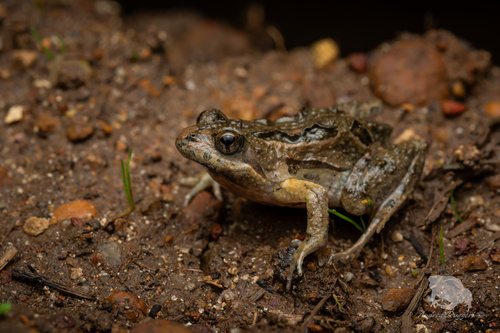
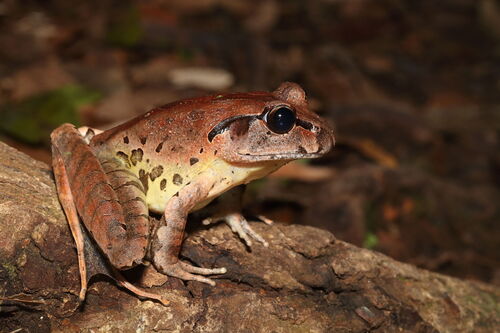
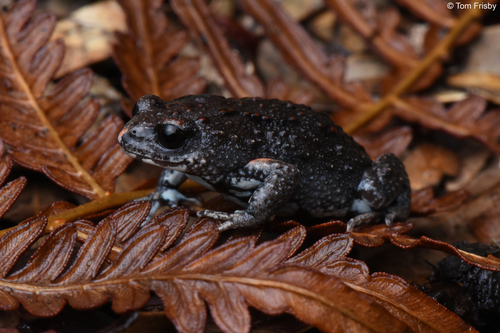
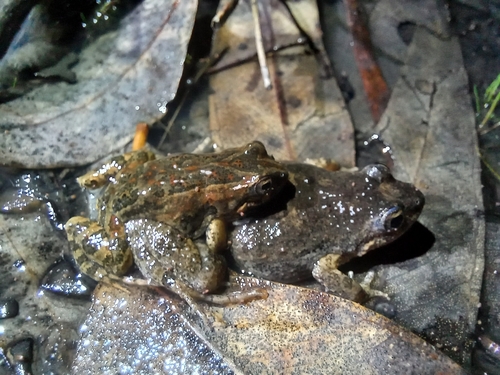
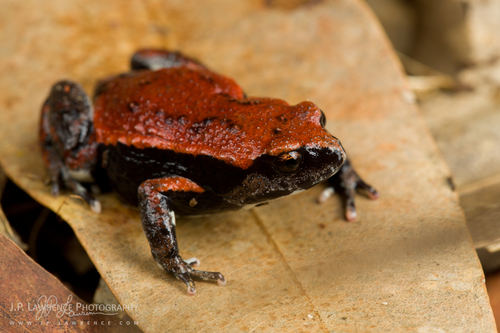
This frog species reaches approximately 35 millimeters in length. Its dorsal (back) surface is most commonly red, ranging from red-orange to red-brown, though grey-red color morphs occasionally occur. A dark, usually black dividing line runs the full length of the frog's side, starting from the nostril. This line divides the red dorsal surface from the ventral (belly) surface, which is strongly marbled in black and white. A white spot is present in the armpit pits.
For habitat, this species is typically associated with rainforest and wet sclerophyll forest, but it can also be found in dry sclerophyll forest, woodland, and occasionally in cleared areas. It usually occurs in frequently flooded locations, including roadside ditches, creeks, and temporary pools. The diet of this toadlet is similar to that of Pseudophryne bibronii; it feeds mostly on small invertebrates that live in leaf litter.
Males produce an "ark" call, which matches the general call pattern of most Pseudophryne species, but the call is a slightly more elongated note than the calls of P. australis and P. bibronii. Males call from beneath moist leaf litter and rotting logs during spring, summer, and autumn, and breeding takes place after rain. Like other Pseudophryne species, the male remains with the eggs at the nest site and may mate with more than one female. Eggs are laid in the nest site; tadpoles hatch after heavy rain floods the nest site, then develop in temporary pools. Tadpole development is relatively short, an adaptation to the ephemeral nature of the pools they live in.