About Pseudohermonassa bicarnea Guenée, 1852
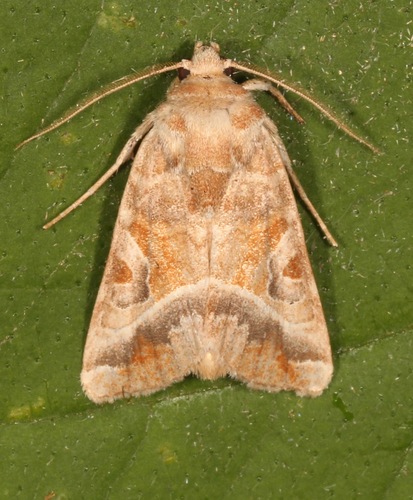
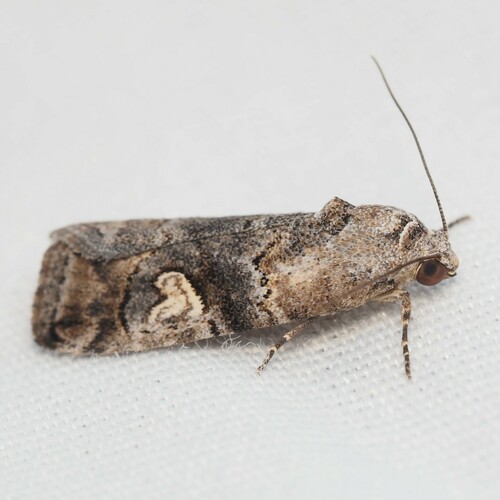
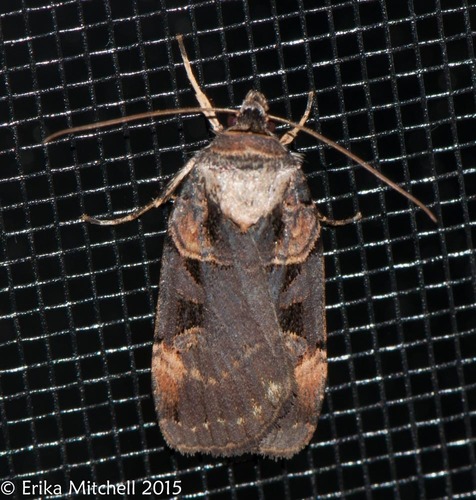
Pseudohermonassa bicarnea, commonly known as the pink-spotted dart, is a moth species belonging to the family Noctuidae. This species was first formally described by Achille Guenée in 1852. Its range covers eastern North America, extending west as far as south-central Saskatchewan and central North Dakota, and south to western North Carolina. There have been recent recorded observations of the species in Tennessee. Adults of Pseudohermonassa bicarnea have a wingspan ranging from 32 to 43 millimeters. Adult moths are active in flight from July through October, and the species produces one new generation each year. The larvae of this species are thought to primarily feed on Glyceria maxima and Glyceria canadensis. Older historical records list additional food plants for the larvae, including Vaccinium, Betula populifolia, Taraxacum officinale, Acer, and meadowsweet.