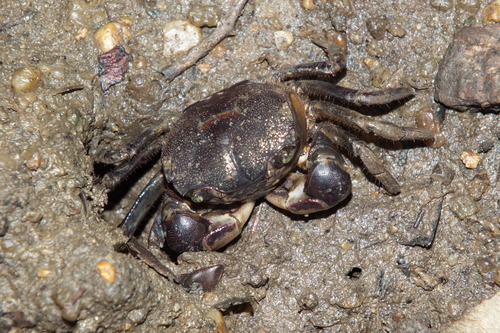
About Pseudohelice subquadrata (Dana, 1851)
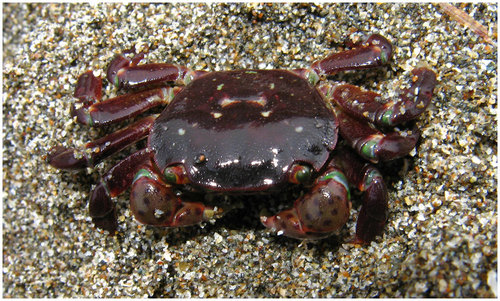
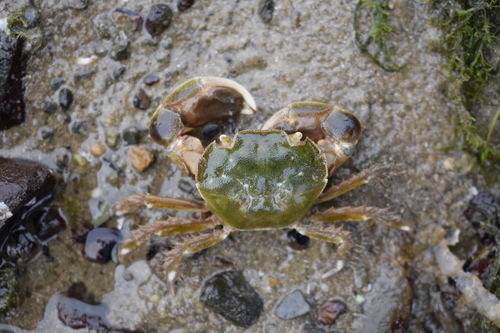
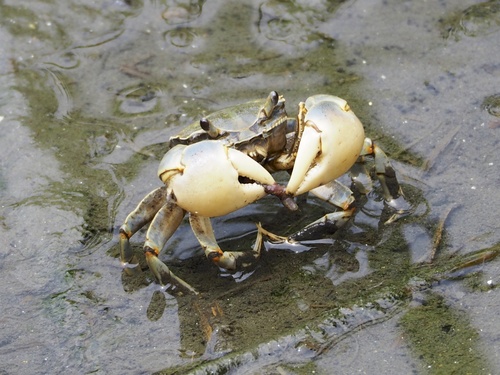
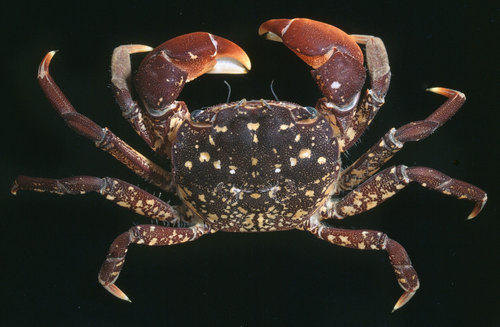
Pseudohelice subquadrata is a species of crab that belongs to the family Varunidae. Its geographic distribution ranges from the eastern Indian Ocean to the western Pacific Ocean; it extends north to Japan, south to Eastern Australia, east to French Polynesia, and west to Indonesia and Thailand. This crab lives in proximity to mangroves, where it burrows into firm soils, firm muddy sand, or areas among loose stones. Its burrows are located towards or above the high tide line on estuary shores and near river mouths of bays, and can have horizontal offshoots beneath the surface that reach up to three metres in length. The crab has a generally rounded shape, with a carapace that can grow up to 25 mm (0.98 in) across. In populations found in Eastern Australia, the carapace is dark purplish, with varying amounts of cream mottling on the rear portion; the legs and claws are also purple with cream mottling. Across the species' entire range, individuals may also be yellowish-brown, orange, olive, or dark green, and always have light mottling. Each side of the carapace features two distinct notches. Common English names for this species are the purple and cream shore crab and the grey crab. The recognized synonyms of Pseudohelice subquadrata are Helice leachi and Chasmagnathus subquadrata.