About Pseudodiploria strigosa (Dana, 1846)
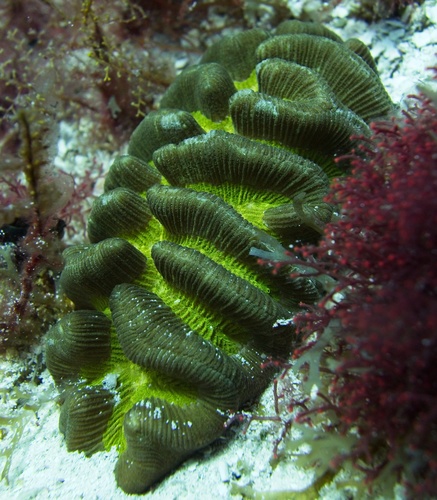
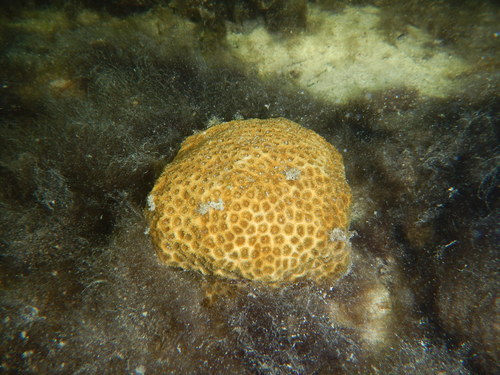
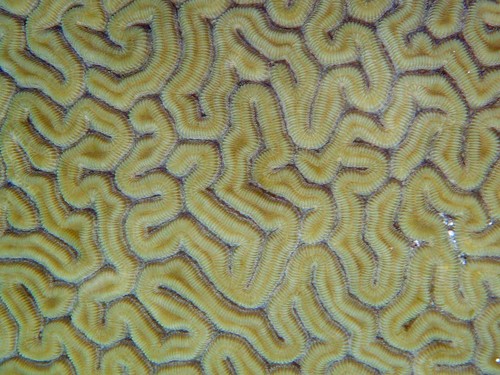
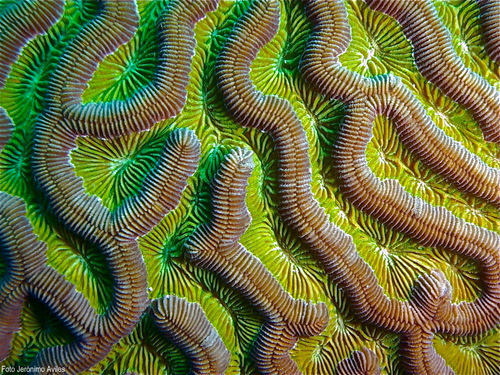
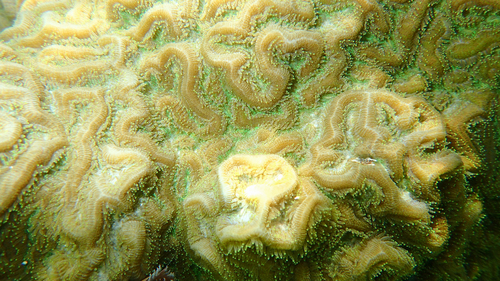
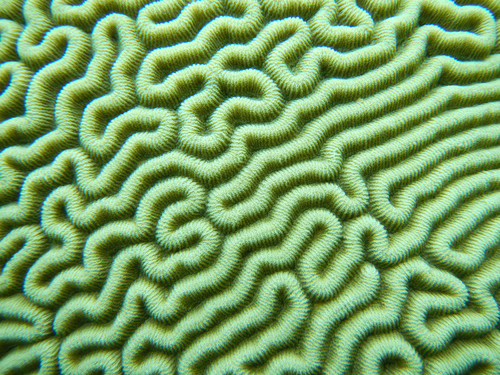
Pseudodiploria strigosa, commonly called the symmetrical brain coral, forms smooth flat plates or massive hemispherical domes that can reach up to 1.8 metres (5 ft 11 in) in diameter. Its surface is covered in interlinking, convoluted valleys; individual coral polyps sit inside cup-shaped depressions called corallites located within these valleys. Each corallite has multiple radially arranged ridges called septa, which continue outside the corallite as costae and connect to matching ridges on adjacent corallites. The rounded ridges that separate the valleys are smoothly rounded, and do not usually have a groove running along their apex. This distinguishes it from the visually similar grooved brain coral, Diploria labyrinthiformis, which does have an apical groove. Symbiotic dinoflagellate algae called zooxanthellae live inside the tissues of this coral, and these algae give the coral its characteristic colour: most often yellowish, greenish brown, or occasionally blue-grey. The valleys of the coral surface are often a paler shade or a contrasting colour to the rest of the structure. The symmetrical brain coral grows in shallow marine areas of the Caribbean Sea, the Bahamas, Bermuda, Florida, and Texas. It is likely the most widespread species of brain coral; it grows not only on coral reefs, but can sometimes also be found on muddy stretches of seabed where few other coral species thrive. It can grow at depths down to approximately 40 metres (130 ft). Fossilised remains of Pseudodiploria strigosa have been discovered alongside fossilised remains of other massive corals: Pseudodiploria clivosa, Siderastrea siderea, and Solenastrea bouroni. These fossils were found in Pleistocene-dated marine deposits in Río Grande de Manatí, Puerto Rico.