About Pseudocyphellaria glabra (Hook.f. & Taylor) C.W.Dodge
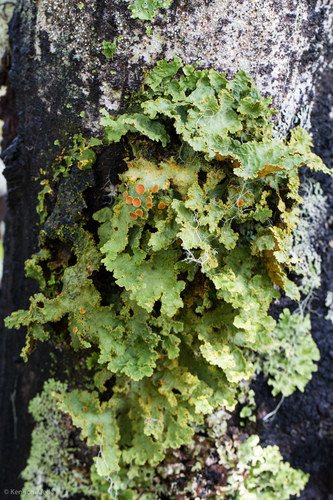
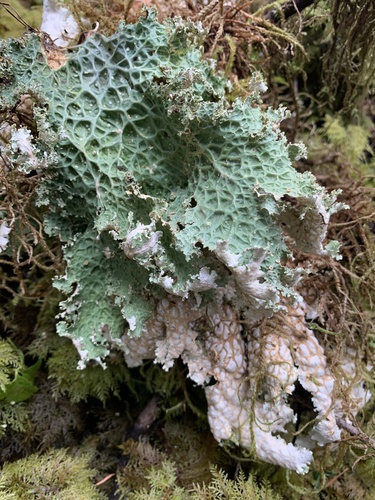
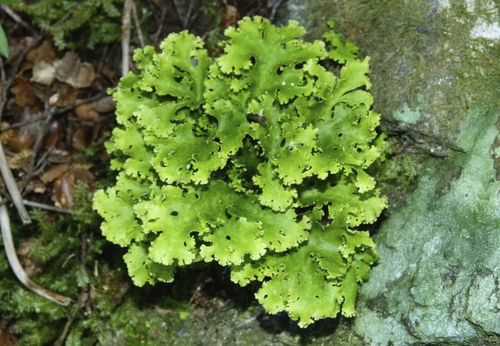
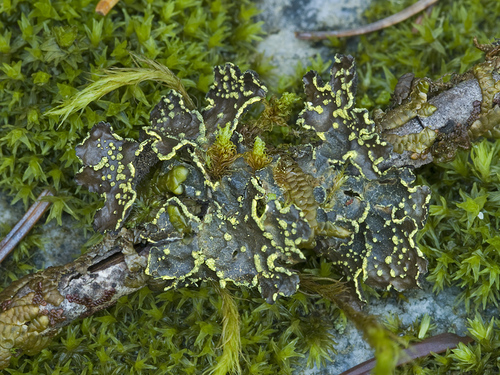
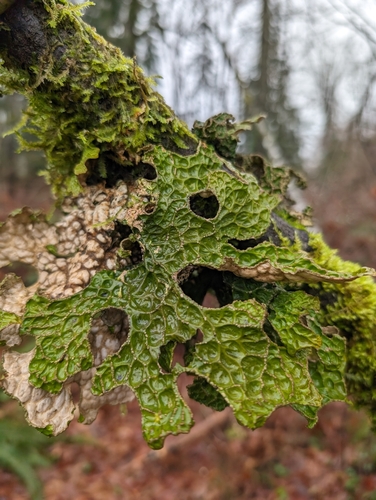
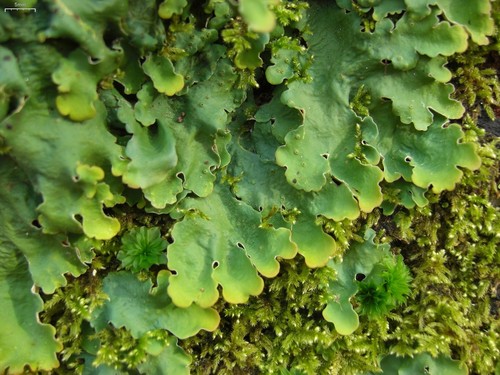
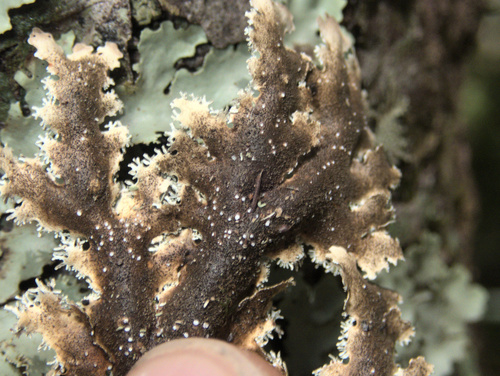
Pseudocyphellaria glabra (Hook.f. & Taylor) C.W.Dodge is a species of corticolous (bark-dwelling), foliose lichen that belongs to the family Peltigeraceae. The upper surface of its thallus is pale green, it has a white medulla, and it also has white pseudocyphellae, which are tiny pores that facilitate gas exchange. This lichen has a disjunct distribution, with its separate populations divided by the Tasman Sea and the Pacific Ocean. It can be found in southeastern Australia, including Tasmania, as well as New Zealand, Argentina, Chile, Lord Howe Island, Macquarie Island, and the subantarctic islands of New Zealand. Population genomic analyses indicate that lichen populations from these different locations are genetically distinct, but regular long-distance spore dispersal during the Quaternary period likely stopped local populations from evolving into separate species. A lichenicolous fungus called Arthonia pseudocyphellariae has been recorded growing as a parasite on Pseudocyphellaria glabra. This fungus was first documented from specimens collected in New Zealand. It causes patches on the host lichen that are bordered by a necrotic zone, with patches measuring 1.5–8.5 mm (0.06–0.33 in) in diameter, and these patches typically occur on the margins of the host's thallus.