About Pseudocreobotra wahlbergi Stal, 1871
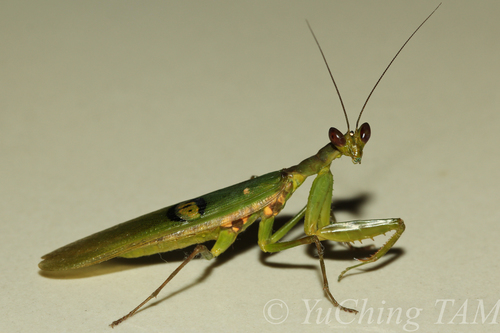
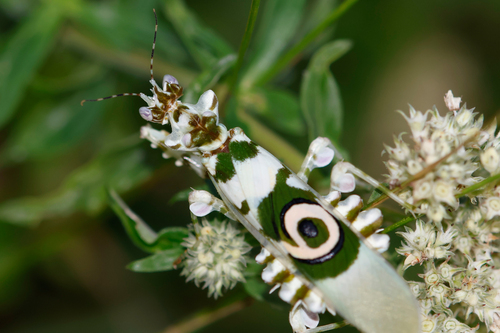
Pseudocreobotra wahlbergi Stal, 1871, gets its name from spiny structures on the underside of adult abdomens. This species has variable coloration: adults are typically light green, but may also appear yellow, pink, or red. Adults have a large, black, green, and cream eyespot on each forewing, which is surrounded by a green patch. The inner sections of the hind wings are orange, while the outer sections of the hind wings are transparent. Nymphs are solid black until they reach their third instar.
In terms of behaviour and ecology, P. wahlbergi uses a deimatic display to deter predators: it spreads its forewings to appear larger, and prominently shows off its eyespots to startle approaching threats. When at rest, the mantis is well camouflaged, and acts as an effective aggressive mimic of a flower. Prey insects will often attempt to pollinate it, at which point the mantis seizes and eats the unsuspecting prey. This species prefers to feed on flying insects and spiders, but will eat almost any insect if these preferred foods are not available. Like many mantis species, female P. wahlbergi practice sexual cannibalism. Nymphs of this species are not cannibalistic until they reach their fourth instar.