About Pseudocolopteryx citreola (Landbeck, 1864)
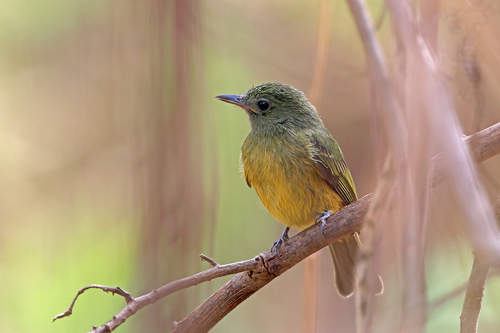
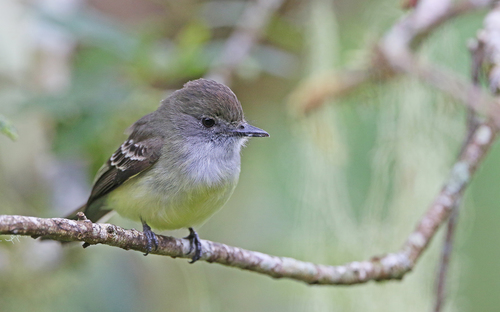
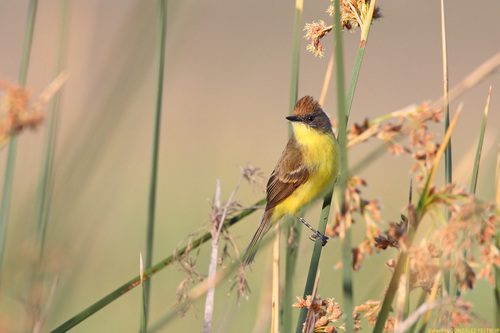
The ticking doradito, Pseudocolopteryx citreola (Landbeck, 1864), measures about 12.5 cm (4.9 in) long and weighs 7.5 to 10 g (0.26 to 0.35 oz). Both sexes share the same plumage coloration. Adult individuals have mostly dull olive-brown heads and upperparts. Their crown has a rufescent tone, their lores and cheeks are dusky, and their tail is dusky olive-brown. Their wings are dull olive-brown, with cinnamon edges on flight feathers and cinnamon tips on wing coverts; the tipped coverts form two thin wing bars. The throat and underparts are lemon yellow. Both sexes have a medium brown iris and dark gray legs and feet. Males have a slender, black, warbler-like bill; females have a mostly black bill, with a pale pinkish base to the mandible. The ticking doradito is distributed in Chile between the Valparaíso and Los Ríos regions, in Argentina north from Chubut Province, and in southern and central Bolivia. There is an unconfirmed sight record of the species in Paraguay, so the South American Classification Committee of the American Ornithological Society lists it as hypothetical in that country. This species inhabits areas with dense Baccharis shrubs, more open areas, and brushlands that contain Tamarix shrubs and trees, as well as freshwater reed beds. In Chile, it is also found in marshes and willow thickets along watercourses. In terms of elevation, it occurs between 300 and 1,300 m (1,000 and 4,300 ft) in Argentina, and can be found as low as sea level in Chile.