About Pseudochromis fuscus Müller & Troschel, 1849
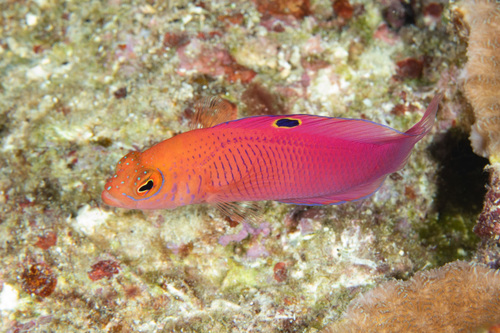
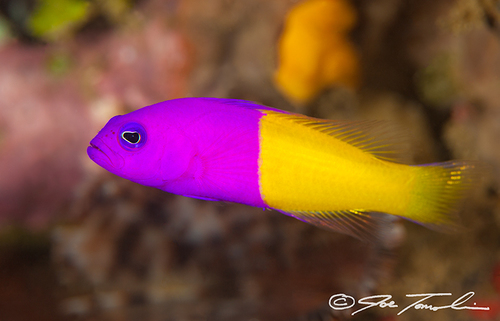
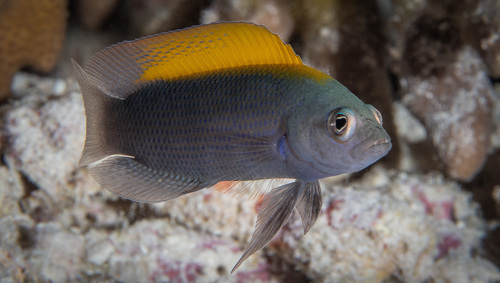
Pseudochromis fuscus, commonly known as the brown dottyback, reaches a maximum total length of around 10 centimeters. This species has three dorsal spines, multiple dorsal soft rays, three anal spines, and several anal soft rays; this spine count distinguishes brown dottybacks from true basses in the closely related family Serranidae. Like most dottybacks, brown dottybacks have an elongated, slender body shape, and they are the largest species in the genus Pseudochromis. They have pear-shaped eyes, similar to bass, and possess canine teeth. Their body color most commonly ranges from bright yellow to dark brown, though orange, pink, and gray individuals of this species have also been recorded. Blue spots are frequently visible on the nape and the front portion of the body. Research indicates that color variation in wild brown dottybacks is not caused by genetic differences, and individual fish can change their body color, though the specific factors that trigger these color changes have not yet been identified. The yellow or brown shade a brown dottyback displays appears to correlate with the color shade of its target prey; for example, bright yellow individuals are more likely to be found near yellow-colored prey. Lighter brown individuals are also more often found in deeper water, while darker brown individuals are more commonly found in shallower areas. Pseudochromis fuscus is native to the south-western Pacific Ocean and the eastern Indian Ocean. Its geographic range extends east from Sri Lanka to Vanuatu, and north from Australia to Hong Kong. The southern edge of its range aligns with the southern limit of coral reefs off the eastern coast of Australia, as this species most often occurs in coral reef habitats. Brown dottybacks are very common fish on coral reefs, and can make up as much as 10% of all piscivorous fish in a reef community. Their competing predators on reefs include species like the moon wrasse and lizardfish. Brown dottybacks are most often found in crevices and on ledges, and also frequently swim near branching corals.