About Pseudoceros dimidiatus Graff, 1893
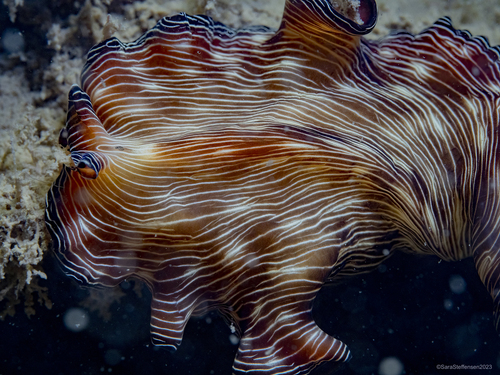
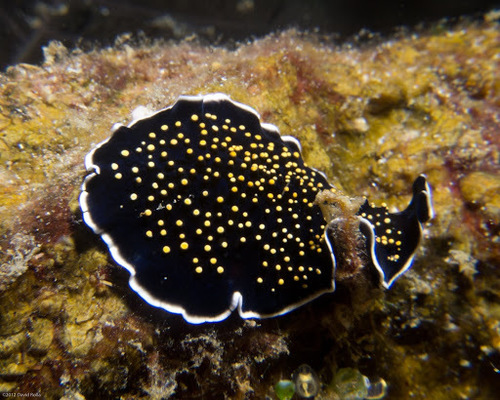
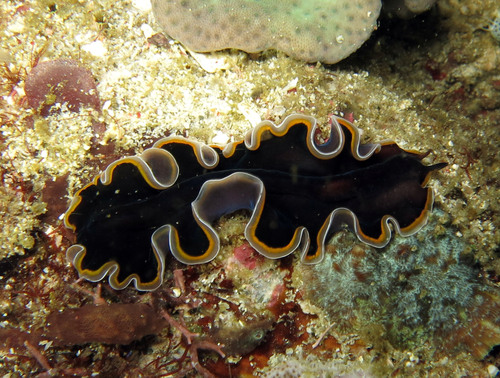
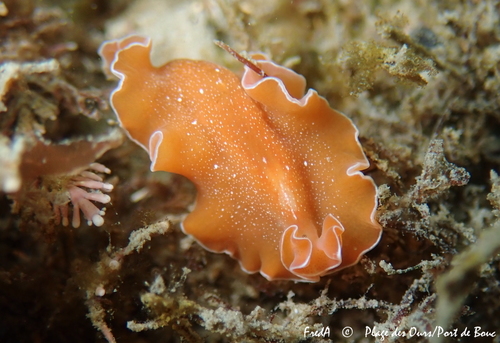
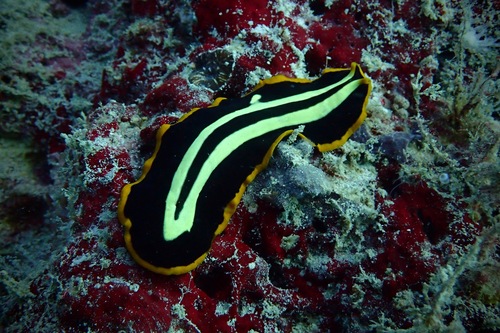
Pseudoceros dimidiatus can grow up to 8 centimetres (3.1 in) long. Its body is elongated and oval, with a velvety upper (dorsal) surface, a grey-black lower (ventral) side, and fairly short pseudo tentacles formed from folds of the front body margin. For most individuals, the body is black with an orange edge. Two broad, longitudinal yellow-greenish stripes, typically separated by a narrow black central line, are also common features. This species is highly variable in color and pattern, with differences in the arrangement and width of transverse stripes, and in the width of longitudinal stripes. It can display at least three distinct color patterns, all using the same set of colors, which signal that it is inedible to predators. Pseudoceros dimidiatus has bilateral symmetry, and its bright contrasting colors act as a warning to predators that they should not eat this species. These flatworms feed exclusively on colonial ascidians, and they are cold-blooded. This species is widespread across the Indian Ocean, ranging from the Red Sea to Australia, and is also found in the Western Pacific Ocean. It lives on coral reefs in tropical waters. The divided flatworm can reproduce both asexually, via body division, and sexually. It is a hermaphrodite, meaning each individual has both male and female reproductive organs. When two individuals mate, they compete to determine which will fertilize the other; the winner acts as the male and fertilizes the other individual.