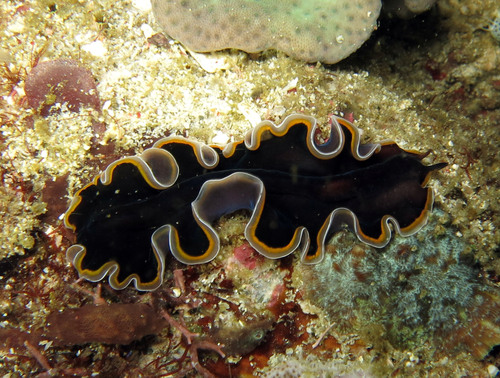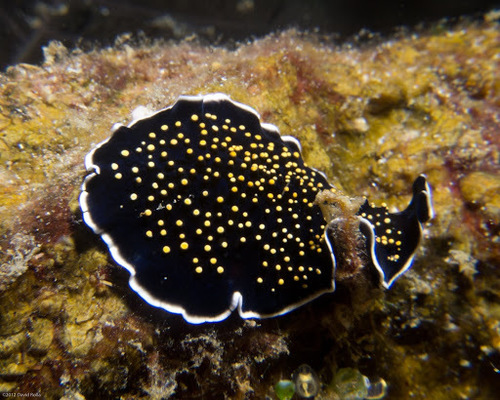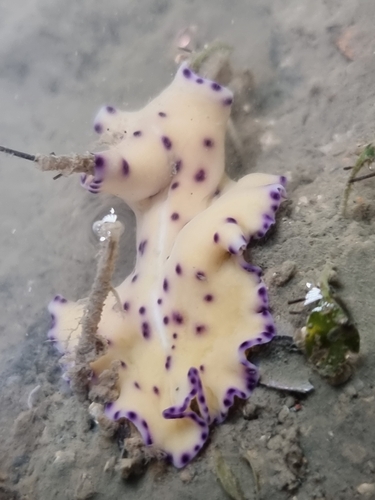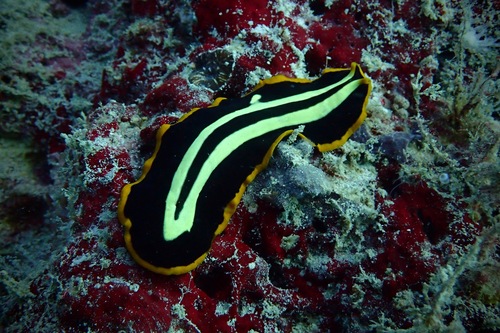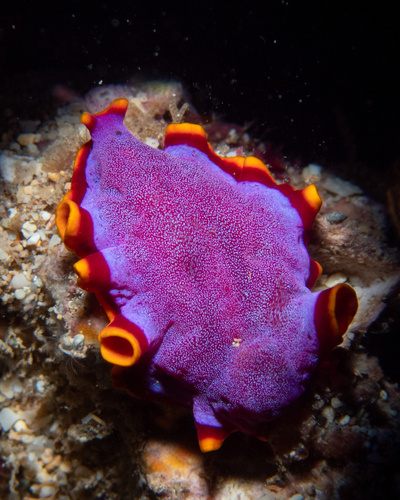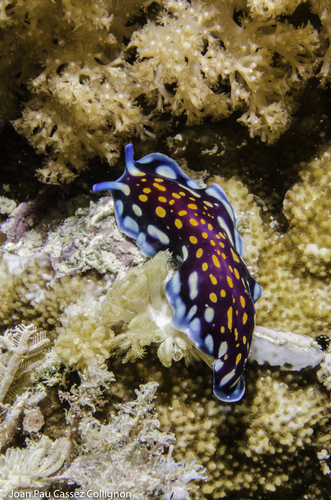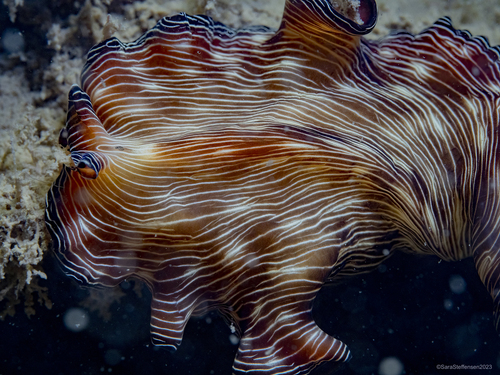
About Pseudobiceros fulgor Newman & Cannon, 1994
Pseudobiceros fulgor, commonly called the lightning worm, is a species of marine flatworm in the family Pseudocerotidae, class Turbellaria. It is most commonly found in tropical regions of the Indo-Pacific, in shallow coral reef habitats. Like all flatworms, Pseudobiceros fulgor is triploblastic, meaning it develops with three germ layers. It is also acoelomate, with no body cavity between its gut and body wall. Pseudobiceros fulgor has bilateral symmetry, which supports its movement and navigation through its environment. During embryonic development, it mostly undergoes spiral cleavage, which affects how its cells are organized as it develops. Pseudobiceros fulgor also occurs in tropical and subtropical oceans worldwide, and inhabits shallow coral reefs, inner reef areas, and seagrass beds, environments it shares with crustaceans and mollusks. A key trait that supports its survival is the ability to regenerate injured body tissue. It prefers areas with moderate water flow and high nutrient availability. Pseudobiceros fulgor is hermaphroditic, with each individual having both male and female reproductive organs. It reproduces via internal fertilization, when sperm and egg join. Fertilized eggs develop directly into juvenile flatworms, which grow into mature small versions of adults, as this species has no larval stage.