About Pseudis paradoxa (Linnaeus, 1758)
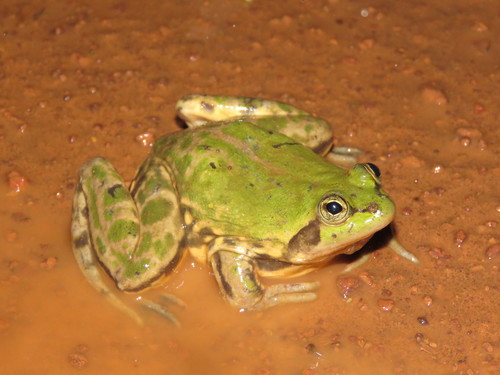
Pseudis paradoxa, commonly called the paradoxical frog or shrinking frog, is a species of hylid frog native to South America. Its common and scientific names reference its unusual life cycle: the species produces the world's longest tadpole, which can reach up to 27 cm (11 inches) in length. During metamorphosis, this very large tadpole "shrinks" as it develops into an ordinary-sized adult frog, reaching only about one quarter to one third of the tadpole's original length. While the longest recorded tadpole of this species was found in Amapá, other species in the genus Pseudis also have large tadpoles and small, ordinary-sized adults. This species lives in ponds, lakes, lagoons, and similar calm water bodies. Its range extends from the Amazon Basin and the Guianas to Venezuela and Trinidad, with a separate disjunct population in the Magdalena River watershed of Colombia and adjacent far western Venezuela. Populations found further south, from the Pantanal region to northeastern Argentina, were originally classified as a subspecies of Pseudis paradoxa. They are now often recognized as a full separate species, P. platensis, though the validity of this taxonomic split remains questionable. In March 2008, scientists from the University of Ulster and the University of the United Arab Emirates published study findings on pseudin-2, a compound naturally found in the skin of the paradoxical frog that protects the frog from infection. The research found that a synthetic version of this compound can stimulate insulin secretion in pancreatic cells under laboratory conditions, without causing toxicity to the tested cells. This means the synthetic compound could potentially be used to develop treatments for Type 2 diabetes.