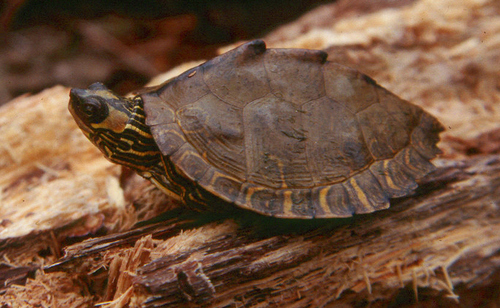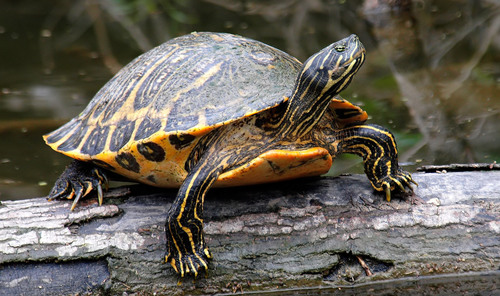
About Pseudemys concinna (Le Conte, 1830)
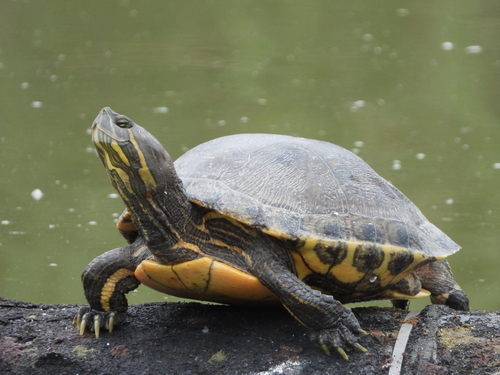
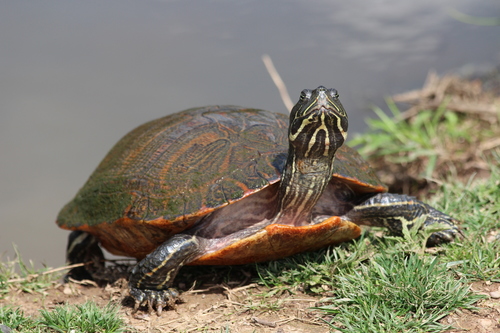
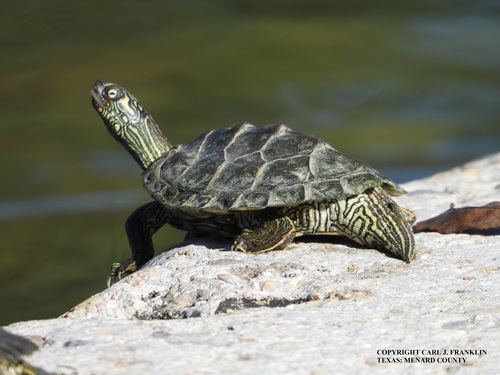
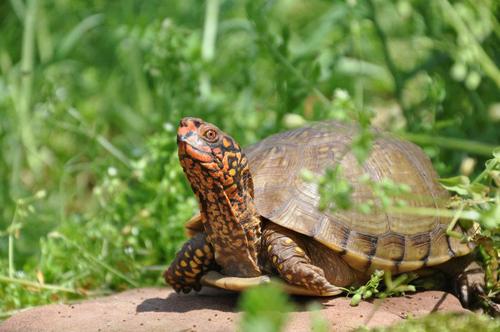
Pseudemys concinna, commonly known as the river cooter, is a species of freshwater turtle belonging to the family Emydidae. It is native to the central and eastern United States, and has been introduced into parts of California, Washington, and British Columbia. Within its native range, Pseudemys concinna occurs from Virginia south to central Georgia, west to eastern Texas and Oklahoma, and north to southern Indiana. This species is most commonly found in rivers with moderate current, and also inhabits lakes and tidal marshes. A 1975 U.S. Food and Drug Administration (FDA) regulation, enacted under the Public Health Service Act, bans the general commercial and public sale of turtle eggs and turtles with a carapace length shorter than 4 inches (100 mm). The ban has been in effect across the U.S. since 1975 due to public health risks from turtle-associated Salmonella. It is enforced by the FDA in cooperation with state and local health jurisdictions. Turtles and turtle eggs offered for sale in violation of this regulation are subject to destruction following FDA procedures. People who refuse to comply with a valid final demand for destruction of violating turtles or eggs may face a fine of up to $1,000, imprisonment for up to one year, or both. Many stores and flea markets still sell small turtles because the FDA regulation includes an exception that allows turtles under 4 inches to be sold for bona fide scientific, educational, or exhibitional purposes, excluding use as pets. As with many other animals and inanimate objects, the risk of Salmonella exposure can be reduced by following basic cleanliness rules. Small children must be taught not to put turtles in their mouths, and to wash their hands immediately after playing with a turtle, feeding it, or changing its water. The mating habits of the river cooter are very similar to those of the red-eared slider. Like other basking turtle species, male river cooters tend to be smaller than females. Males use their long claws to flutter at the face of the much larger female, and females often ignore these advances. After detecting what may be a pheromone signal while sniffing a female's tail, a male will court the female by swimming above her, vibrating his long nails and stroking her face. Females have also been observed performing this behavior to initiate courtship. If the female is receptive, she will sink to the bottom of the river and allow the male to mount for mating. If mating is successful, the female crawls onto land several weeks later to find a nesting site; females often cross highways while searching for suitable nesting spots. Early sources report females lay between 12 and 20 eggs at a time, close to water, with eggs hatching within 45 to 56 days and hatchlings typically staying near the nest through their first winter. More complete records note mating takes place in early spring, and nesting usually occurs between May and June. The female selects a nesting site with sandy or loamy soil, within 100 ft (30 m) of the river's edge, in an open area with no major obstacles for hatchlings to pass on their way to the river. She digs the nest with her hind feet. She can lay 10–25 or more eggs in one or more clutches. Eggs are ellipsoidal and approximately 1.5 inches (4 cm) long. Incubation time varies with temperature, and averages 90–100 days. Hatchlings generally emerge in August or September. There are recorded cases of late clutches over-wintering and hatching the following spring. A newly emerged hatchling has a round carapace about 1.5 inches (4 cm) in diameter, that is green with bright yellow markings.