About Pseudelaphe flavirufa (Cope, 1867)
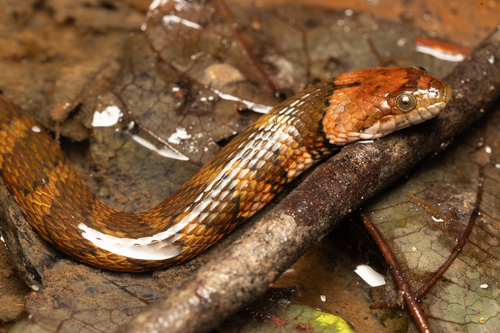
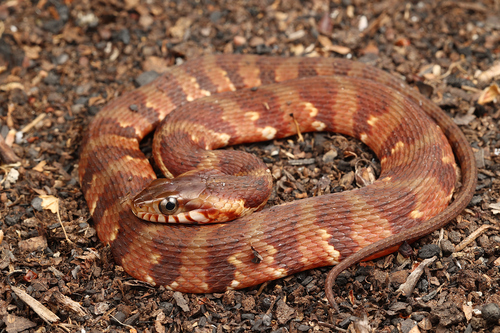
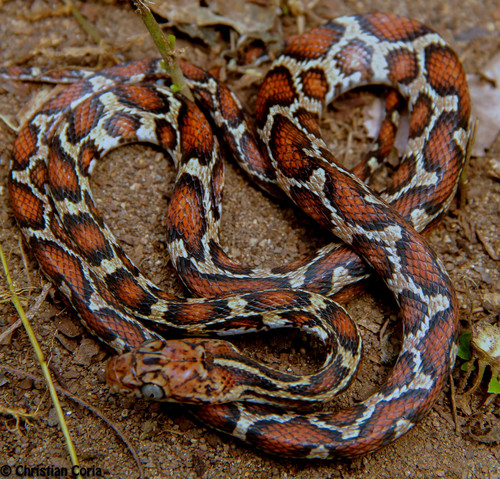
Pseudelaphe flavirufa, first described by Cope in 1867, can reach a total length of 1.22 meters (4.0 feet), with a tail that measures 26 centimeters (10 inches) long. On its dorsal side, its base color is yellowish or pale brown, marked with a series of reddish or chestnut-brown spots that have black edges. These spots may join together to form a zigzag stripe. An alternating row of smaller spots runs along each lateral side, next to the main dorsal row of spots. On its ventral side, it is yellowish, and can be either completely unmarked or covered in small brown spots. This species is geographically distributed across multiple Mexican states: Campeche, Chiapas, Oaxaca, Puebla, Querétaro, Quintana Roo, San Luis Potosí, Tamaulipas, and Zacatecas. It also occurs in the Central American countries of Belize, Guatemala, Honduras, and Nicaragua. The preferred natural habitat of Pseudelaphe flavirufa is forest. Pseudelaphe flavirufa reproduces by laying eggs, meaning it is oviparous.