About Pseudacris ornata (Holbrook, 1836)
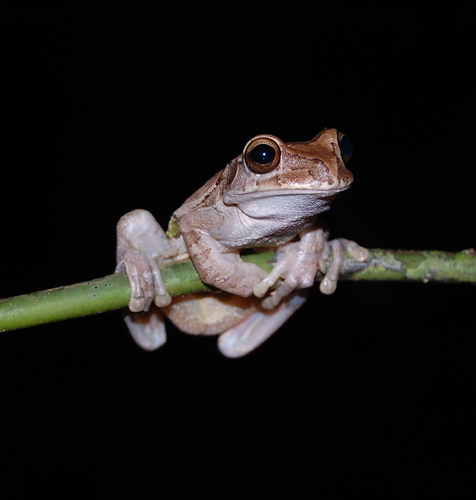
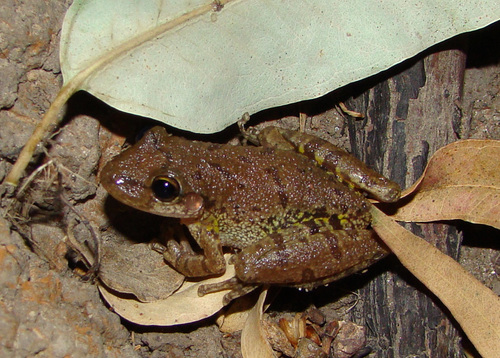
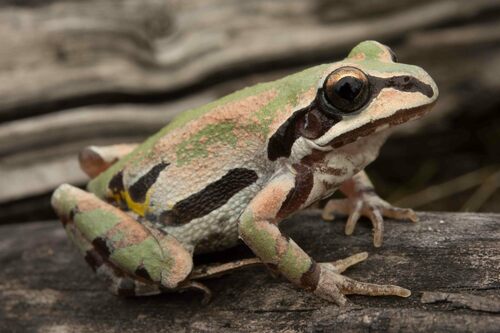
Pseudacris ornata, commonly called the ornate chorus frog, measures 25–38 mm (1–1.5 in) in head-body length, with a maximum recorded size of 4 cm. Its background body color varies by location, most often reddish-brown or gray; a rare dominant allele can produce a bright green background color, and pinkish individuals also occur. This species typically has a defined but broken stripe or a series of spots running from the nose down the side of the body. A distinct light-colored line marks the upper lip, and many individuals have a faint triangular marking on the very top of the head. The belly is pure white, and yellow spots are usually present on the body in front of the hind legs. Ornate chorus frogs are most commonly found on the Southern coastal plain. They typically inhabit xeric habitats, including pine stands, sandhills, and pine savannahs. Breeding occurs in woodland ponds, flooded fields, and roadside ditches, with the highest breeding activity seen in ponds within sandhills, pine forests, or pine plantations. Breeding sites commonly have an open canopy and herbaceous vegetation. For tadpoles to fully develop, this species requires seasonally flooded, fish-free wetlands that hold water for three to four months. Ornate chorus frogs reach sexual maturity at around 1 year of age, and reproduce via external fertilization. Females release eggs at the same time males release sperm, and the pair remains in an axillary amplexus position to ensure fertilization. Mating takes place from November to March, and both males and females may mate with multiple partners. Eggs are laid in clusters of 10 to 100, which are attached to submerged vegetation. After laying, eggs are abandoned, and neither parent provides any parental care to eggs or hatched tadpoles. Eggs hatch between 1 and 2 weeks after laying, and hatching time is temperature dependent: colder temperatures extend the time until hatching, but also lead to larger size when tadpoles complete metamorphosis. After hatching, tadpoles have two yellow stripes along the sides of a dark back, a high tail fin, and some individuals have a bicolored tail. Tadpole development into fully formed frogs takes between two and four months, and temperature affects both development time and the frequency of different color morphs. The ratio of gray to brown morphs within a single clutch of tadpoles is influenced by the population density and temperature experienced during tadpole growth.