About Psephotellus chrysopterygius (Gould, 1858)
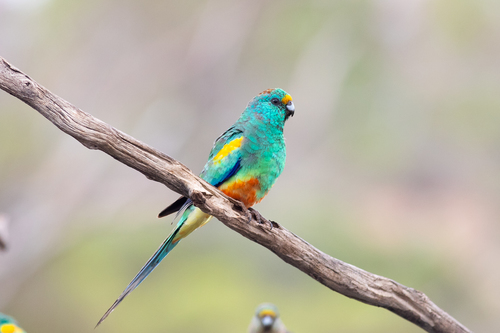
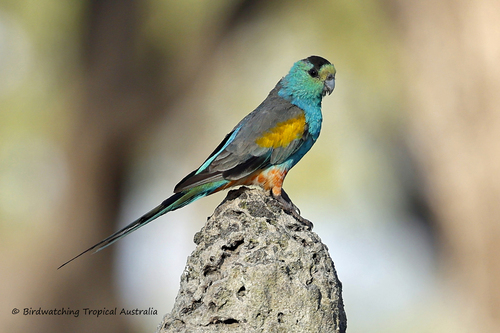
The golden-shouldered parrot, scientifically named Psephotellus chrysopterygius (Gould, 1858), measures 25–27 cm (9.8–10.6 in) in length and weighs 54–56 g (1.9–2.0 oz). Adult males are predominantly blue, with a distinctive yellow patch over the shoulder, a black cap, a pale yellow frontal band, extended dark salmon pink coloring on the lower belly, thighs, and undertail-coverts, and a grey-brown lower back. Adult females are mainly dull greenish-yellow, with a broad cream bar on the underside of the wings; older females develop a charcoal grey cap, and their vent feathers are pale salmon pink. Juveniles resemble adult females, though newly fledged males have a brighter blue cheek patch than females of the same age. This parrot inhabits open forested grassland with abundant populations of multiple termite species and their mounds, which are often spaced just a few metres apart. It feeds on seeds of small grass species, and for several months of the year (mainly the period before the wet season begins), it relies almost entirely on the small but numerous seeds of firegrass, Schizachyrium fragile. A key habitat requirement is the presence of appropriately sized terrestrial termite mounds, which the parrots use for nesting. This nesting habit has given the golden-shouldered parrot and its close relatives the common name of antbed parrots.