About Psammoperca waigiensis (Cuvier, 1828)
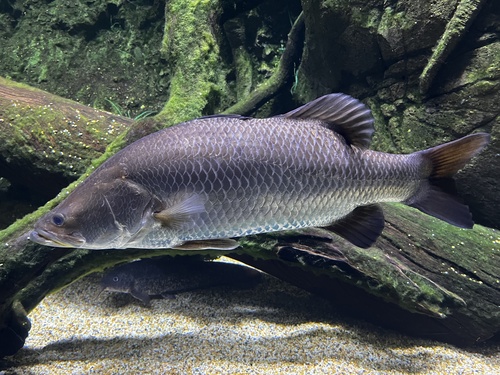
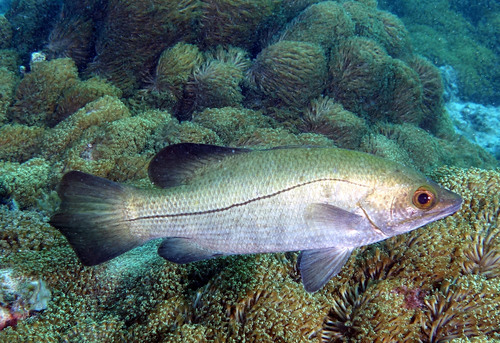
The Waigieu seaperch (Psammoperca waigiensis), also called Waigeo barramundi, is a marine fish species belonging to the family Latidae within the order Carangiformes. It is the only recognized species in the genus Psammoperca. This species is native to tropical coastal waters; its range extends south from the Bay of Bengal through Indonesia to northern Australia, and north through the Philippines and the South China Sea to Japan. P. waigiensis reaches a maximum total length of 47 centimeters (19 inches). Its body coloration ranges from brownish to steel-grey, and sometimes displays white vertical bars along its sides. It has the typical body shape of a centropomid. It can be told apart from the co-occurring barramundi (Lates calcarifer) by its widely spaced nostrils, shorter maxilla that does not extend past the eye, and its reddish eye. This "sea perch" lives mainly around rocks and in coral reefs, and favors vegetated waters. It is a nocturnal predator: it feeds mainly on crustaceans and other fish, and hides during the day. Both the species and its common name are derived from Waigeo, an island in Indonesia. The common name has variant spellings including Waigeo seaperch and Weigeu seaperch. It also goes by other common names: sand bass, sand perch, and glasseye perch. The generic name Psammoperca comes from the Greek words ψάμμος (meaning sand) and πέρκη (meaning perch).