About Prunus cerasifera Ehrh.
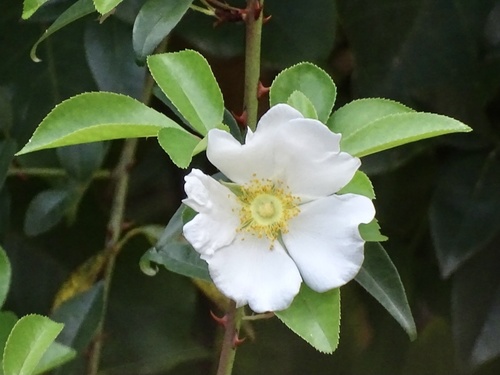
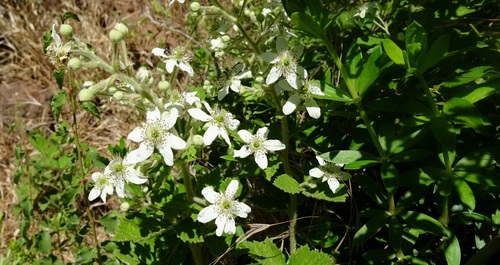
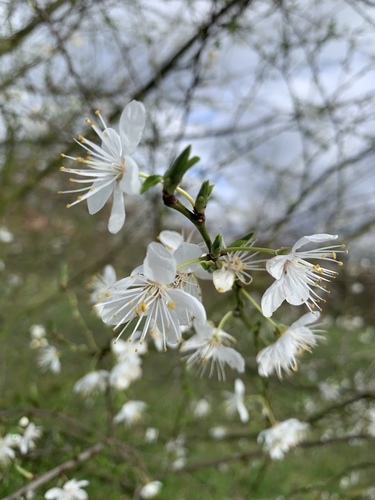
Prunus cerasifera Ehrh. Wild forms of this species are large shrubs or small trees that grow 8 to 12 metres (26 to 39 ft) tall. They are sometimes spiny, with smooth, hairless, ovate deciduous leaves that are 3 to 7 cm (1 to 3 in) long. It is one of the first trees native to Europe to flower in spring, often starting to bloom in mid-February before leaves emerge. Its flowers are white or pale pink, around 2 cm (3⁄4 in) across, with five petals and many stamens. It produces an edible drupe fruit that is 2 to 3 cm in diameter, ripening to yellow or red between early July and mid-September. This species is self-fertile, but can also be pollinated by other Prunus varieties, such as the Victoria plum. The plant can propagate either by seed or by suckering, and is commonly used as a rootstock for other Prunus species and cultivars. It is native to Southeast Europe and Western Asia, and has become naturalised in the British Isles, scattered locations in North America, and parts of Southeast Australia. In Southeast Australia, it is classified as a mildly invasive weed that grows in bushland near urban centers. P. cerasifera is thought to be one of the parent species of the cultivated plum Prunus domestica, possibly by hybridizing with the sloe Prunus spinosa, or potentially being its sole parent. This means it is an ancestor of most commercial plum varieties grown in the UK and mainland Europe, including Victoria, greengages, and bullace. The cherry plum is a popular ornamental tree for gardens and landscaping, grown for its very early spring flowering. Many cultivars have been developed, with many selected for their purple foliage, such as P. cerasifera var pissardii (Carrière) L.H. Bailey (also known as P. 'Atropurpurea'). The cultivar 'Nigra', which has black foliage and pink flowers, has earned the Royal Horticultural Society's Award of Garden Merit. Prunus × cistena, the purple leaf sand cherry, is a hybrid between P. cerasifera and the sand cherry Prunus pumila, and has also won the Award of Garden Merit. These purple-foliage forms, often called 'purple-leaf plum', also produce dark purple fruit that can be made into an attractive, intensely coloured jam. They can bear either white or pink flowers. The cultivar 'Thundercloud' has bright red foliage that darkens to purple as it matures. Other cultivars, such as 'Lindsayae', have green foliage. Some types of purple-leaf plums are used for bonsai and other forms of living sculpture. Cultivated cherry plums can produce fruits, foliage, and flowers in a range of different colours. The fruits of Prunus cerasifera are edible. Some varieties have sweet fruits that can be eaten fresh, while other varieties have sour fruits that are better suited for making jam. In Georgian cuisine, cherry plums are a key ingredient used to make tkemali sauce, and are also included in a number of popular dishes such as kharcho soup and chakapuli stew. It is a popular tree in Romania, where immature fruits are used to sour soups, fully ripened fruits are eaten raw, and overripe fruits are used to make moonshine due to their high sugar content.