About Prunella vulgaris L.
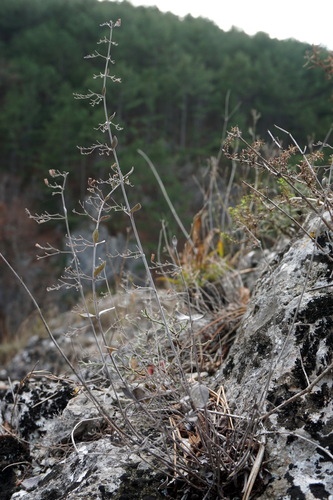
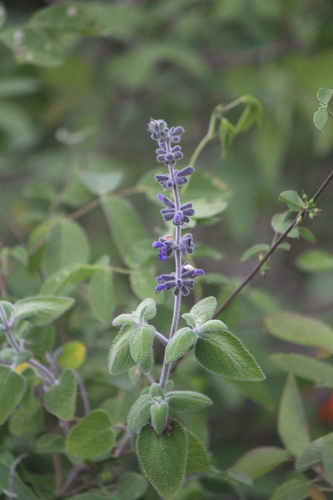
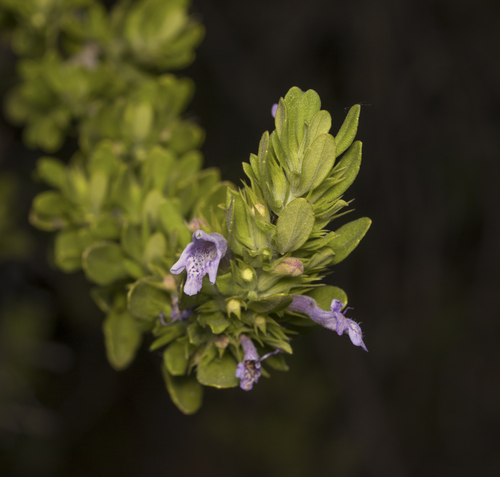
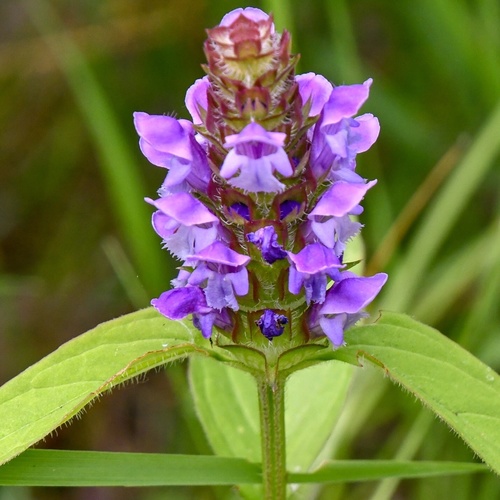
Prunella vulgaris L. is a perennial herb that grows 5–30 cm (2.0–11.8 in) tall. It has creeping, somewhat square-shaped reddish stems that branch at leaf axils. Its leaves grow in opposite pairs; they are lance-shaped or ovate, with smooth entire margins, and sometimes have reddish tips. Leaves measure 1.5–6 cm (0.59–2.36 in) long and 0.6–2.5 cm (0.24–0.98 in) wide, with 3 to 7 veins branching from the central vein toward the leaf margin. Leaf stalks (petioles) are usually short, but can reach up to 5 cm (2.0 in) long. Flowers form tight terminal clusters arranged in a spike; a pair of sessile bracts sits just below the inflorescence, arranged on either side like a collar. Corollas are purple (sometimes white), two-lipped and tubular. The upper lip forms a hood, while the lower lip forms a cup with a fringed margin. Flowering timing varies with climate and other conditions, but mostly occurs in summer, from June to August in the USA. Self-heal, the common name for this species, reproduces both by seed and vegetatively via stolons that root at their nodes. Two varieties of Prunella vulgaris are formally described: var. vulgaris and var. lanceolata. It sometimes hybridizes with Prunella laciniata, producing the hybrid Prunella × intermedia. This species is native to Europe, Asia, Africa, and North America, and is common across most temperate climates. It can spread aggressively via creeping stolons and roots, forming dense mats that can displace other plant species. Due to its ability to outcompete other desirable vegetation, it can become weedy in lawns and damp shady locations, and it is listed in Weeds of the Northeast and Weeds of the Great Plains. It was introduced to many countries in the 1800s, and has become invasive in the Pacific Islands, as well as in Australia, New Zealand, and Hawaii. In Ireland, it is generally abundant. It also grows in Kashmir, where it is called kalyuth; a decoction of the plant is used as a wash for bathing to relieve muscle pain. It grows on roadsides, in gardens, waste places, and woodland edges, and typically grows in basic and neutral soils. Its conspicuous flowers are favored by bumblebees and butterflies, and it is a host species for the larvae of the clouded sulphur butterfly, Colias philodice. Prunella vulgaris is edible. Young leaves and stems can be eaten raw in salads, the whole plant can be boiled and eaten as a leaf vegetable, and aerial parts can be powdered and brewed into a cold infusion to make a beverage. It was used as traditional medicine by Indigenous peoples of North America. The Quileute, Quinault, and Coast Salish peoples of the Pacific Northwest extracted juice from the plant to use as a topical treatment for boils. The Nuxalk people boiled the entire plant to make a weak tea. The Nlaka'pamux people drink a cold infusion of the whole plant as a common beverage. In Chinese traditional medicine, this herb is called xia ku cao (夏枯草), and is used to treat dizziness, red eyes, dry cough, dermatitis, and boils. It is also a main ingredient in several southern Chinese herbal teas, including commercial beverages like Wong Lo Kat.