About Prunella modularis (Linnaeus, 1758)
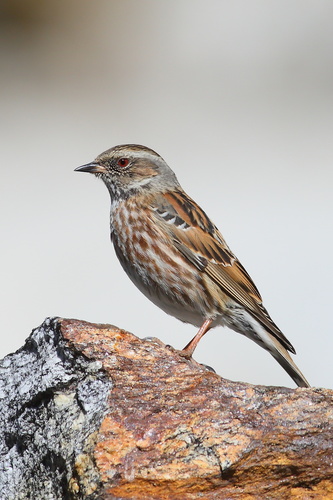
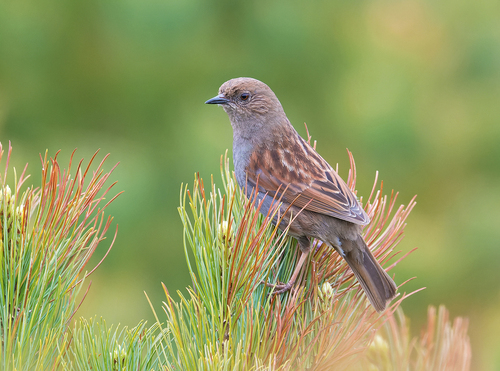
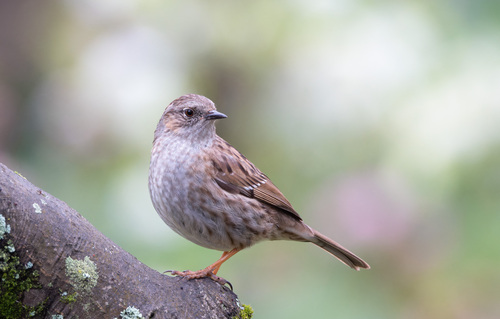
The dunnock, scientifically named Prunella modularis (Linnaeus, 1758), is a bird that is roughly the size of a robin, measuring 13 to 14.5 cm (5.1 to 5.7 inches) in total length. It has a brown back marked with blackish streaks, giving it a general appearance that resembles a small house sparrow. Like the house sparrow, the dunnock has a plain, drab plumage; this colouring may have evolved to act as camouflage that helps it avoid being detected by predators. Its underparts are brownish, and it has a thin, pointed bill. Adult dunnocks have a dull grey head, and males and females share the same colour pattern. Juvenile dunnocks have browner head colouring, looser fluffier feathers, and more prominent streaking across their entire bodies. Unlike other small brown birds of similar size found in Europe, dunnocks frequently flick their wings, a behaviour that is especially common during territorial disputes or competition for mating opportunities. This distinctive wing flicking behaviour led to the old common nickname "shufflewing" for the species. The dunnock's main call is a high, sharp, persistent tseep, paired with a short, soft trilling note. This call gives away the location of the bird, which is otherwise easy to overlook. Its song is a fast, thin, tinkling sweet warble. Dunnocks are native to a wide range of Eurasia, covering most of Europe and southwest Asia — this native range includes Lebanon, northern Iran, and the Caucasus. This species is the only accentor that is commonly found in temperate lowland habitats; all other accentor species live in upland regions, or (in the case of the Siberian accentor) subarctic lowlands. Habitats that dunnocks prefer include woodlands, shrub areas, gardens, and hedgerows. In these habitats, they usually feed on the ground, most often seeking out detritivores as a food source. Dunnocks were successfully introduced to New Zealand in the 19th century, and they are now widely spread across the country as well as on some of its offshore islands.