About Prumnopitys taxifolia (Banks & Sol. ex D.Don) de Laub.
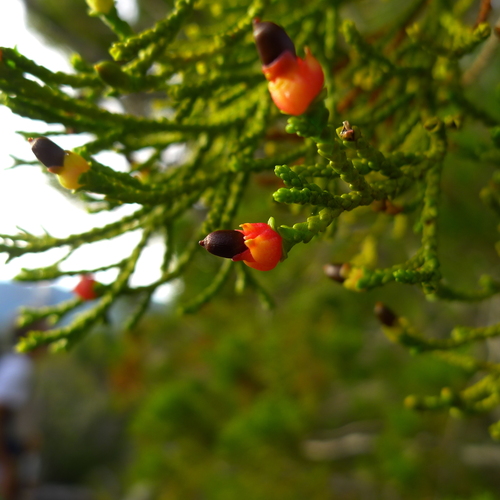
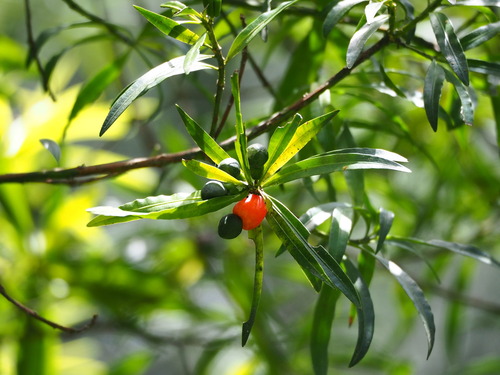
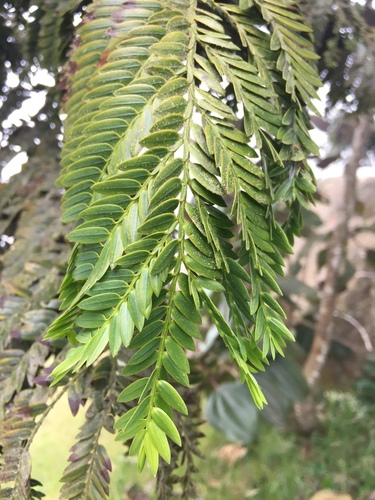
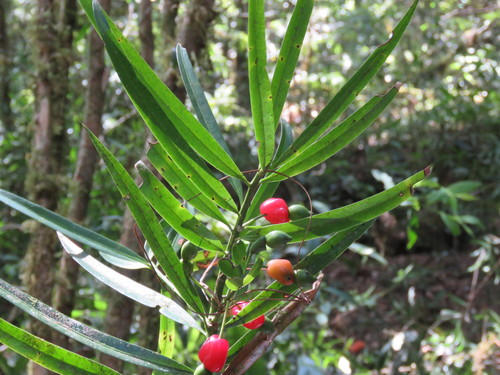
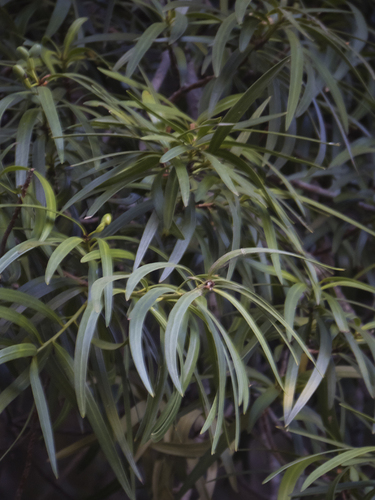
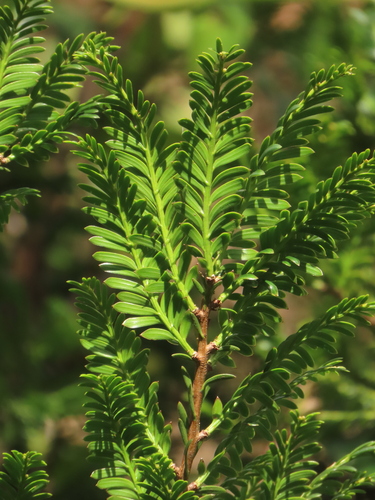
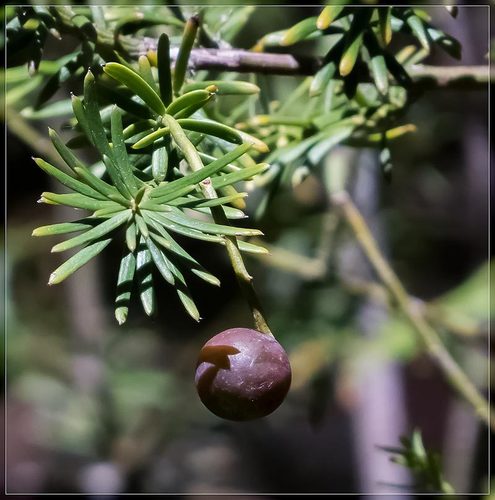
Prumnopitys taxifolia (Banks & Sol. ex D.Don) de Laub. is a dioecious evergreen conifer species in the family Podocarpaceae. Mature trees reach up to 30 metres (100 feet) in height, with trunks up to 1–2 metres (3 feet 3 inches – 6 feet 7 inches) in diameter. Young branches grow in an ascending pattern before spreading out as the tree ages, forming a domed or rounded crown. The bark is thin and smooth, especially on younger trees, and bears red or purplish-brown spots that resemble hammer marks when fresh. These spots weather to a dark brown or black colour, and the bark peels freely into thick flakes; outer bark itself ranges in colour from dark brown to almost black. The wood of this species is very dense, hard, and ranges from dark brown to yellow-brown in colour. The average lifespan of P. taxifolia is 600 years, though one specimen in Tongariro National Park is estimated to be over 1000 years old. The species shows pronounced heteroblasty, with a distinctly different juvenile growth form. The juvenile stage is a tangled shrub so distinct that early European botanists in New Zealand initially classified it as a separate species. Unlike the related miro (Pectinopitys ferruginea), P. taxifolia has a distinctive long-lasting juvenile stage made up of a tangle of slender, flexible, divaricating branchlets with only a scattering of leaves. This juvenile stage can last up to 60 years, after which an adult trunk begins to grow from the top of the juvenile shrub, and the divaricating branchlets are shed. The reason for this distinct heteroblastic development is not confirmed; hypotheses suggest the tangled branches may create warmer internal temperatures to allow survival in colder climates, or may act as a defence against browsing animals. Juvenile leaves measure 5–10 × 1–2 mm, are brown to pale yellow, narrow and tapering with a pointed tip, and may grow on long whip-like shoots. Adult leaves measure 10–15 × 1–2 mm, are dark green, glaucous, subdistichous and often apiculate; they can also be broader, more pectinate, and range from (6–)10–20 mm long by (1–)1.5–2 mm wide. All adult leaves are widest near the middle, with nearly parallel sides. The midrib is raised on a bluish-green surface, which bears waxy, pale bluish-green bands of stomata. Canadian botanist James Emory Eckenwalder hypothesised that the leaves of P. taxifolia may contain unidentified physiologically active compounds. Like all conifers, P. taxifolia does not produce flowers or true fruits; instead, it produces pollen and seed in cones, forming what are commonly called 'pseudo-fruits'. The species is dioecious, meaning male and female reproductive structures grow on separate individual trees. Female ovules grow on short axillary branches, with 3–10 ovules per 40 mm long spike. Male pollen cones grow on nearly leafless lateral and axillary spikes near the ends of foliage branches. Each spike is yellow, and holds up to 10–30 cones; each cone is 5–12 mm long and approximately 2 mm wide. Seed cones take 12–18 months to mature, and are produced year-round. They are round to oval, fleshy, roughly spherical, purplish-black, and around 8–10 mm wide. The diploid chromosome count of P. taxifolia is 38. Prumnopitys taxifolia is endemic to New Zealand, where it is distributed across the North Island and South Island. It also occurs on Stewart Island, but is extremely uncommon there; in 1889, Thomas Kirk reported only one known Stewart Island specimen growing on the southern side of Halfmoon Bay in his work The Forest Flora of New Zealand. On the South Island's West Coast Region, P. taxifolia commonly grows alongside southern beech (Nothofagus) species. In his 1889 revision of New Zealand plants, Kirk noted the species was very common in central North Island, and in the western and south-western parts of the South Island. In 2013, the IUCN Red List assessed P. taxifolia as Least Concern with a stable population trend. In the 2023 New Zealand Threat Classification System assessment, the species is ranked as Not Threatened. Prumnopitys taxifolia typically grows in lowland and montane forests, at elevations between 20–1,000 m (70–3,000 ft) above sea level. It is commonly found on mountain slopes, growing in fertile, well-drained soils. It can grow well in the drier climates of eastern regions of both the North and South Islands, where rainfall is relatively low. The largest specimens usually grow in deep pumiceous soils or lime-rich soils beneath limestone escarpments. Like Pectinopitys ferruginea, it is commonly found on alluvial soils in the South Island's West Coast Region. P. taxifolia is slow-growing, wind-resistant, highly shade-tolerant, and can regenerate successfully under closed forest canopies. The pseudo-fruits of P. taxifolia are dispersed by frugivorous (fruit-eating) animals. The fruits reflect some ultraviolet radiation, which is visible to some bird and vertebrate species, though their reflection is weaker than that of Dacrycarpus dacrydioides fruits. A 1989 study published in the New Zealand Journal of Ecology recorded kererū (Hemiphaga novaeseelandiae), kōkako (Callaeas wilsoni), tūī (Prosthemadera novaeseelandiae), and weka (Gallirallus australis) as fruit dispersers for this species. Its fruits are also eaten by introduced blackbirds (Turdus merula) and song thrushes (Turdus philomelos). Kākā (Nestor meridionalis) have been recorded destroying P. taxifolia fruits. The fruits are also eaten by the endemic New Zealand moth Heterocrossa iophaea. P. taxifolia acts as a host for native beetles Ambeodontus tristis and Prionoplus reticularis. A 2012 study found that P. taxifolia seeds can still germinate after passing through the digestive tract of feral pigs (Sus scrofa), with a 57 percent germination success rate. A 2021 study hypothesised that the extinct little bush moa (Anomalopteryx didiformis) consumed P. taxifolia fruits, though in lower quantities than other native plant species at the Borland Burn study site in Fiordland National Park. This species can host epiphytes from the genus Astelia. In 2023, a study published in MycoKeys documented three lichen species in the genus Chaenothecopsis that grow primarily on exudates from P. taxifolia. One of these species, C. matai, was named after the tree. P. taxifolia is sensitive to fire and has a moderate flammability rate. Like all conifers, P. taxifolia is wind-pollinated. Its seed cones have an elongated central axis that holds around twelve ovules. Each ovule sits below specialised leaf-like bracts. At the base of each bract, a groove forms a small gutter around the ovule. During pollination, pollen collects in these grooves before and after a drop of secretion appears, which helps the cone capture pollen efficiently.