About Prumnopitys andina (Poepp. ex Endl.) de Laub.
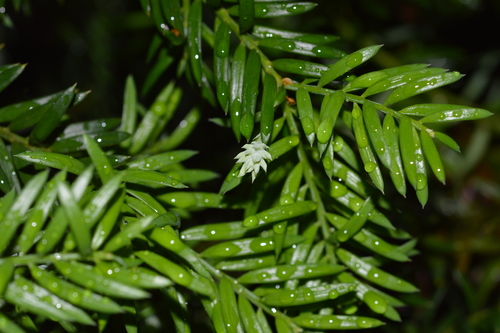
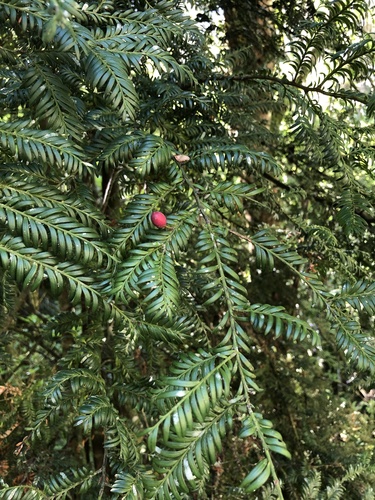
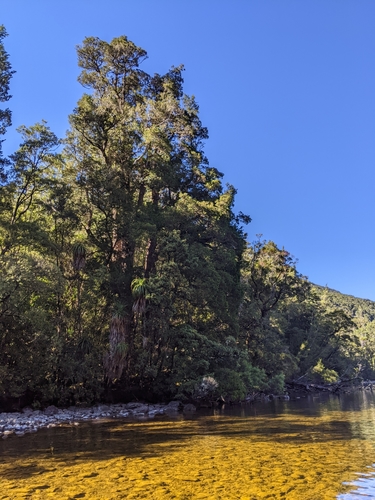
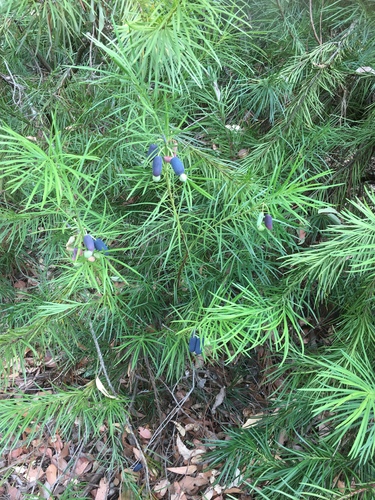
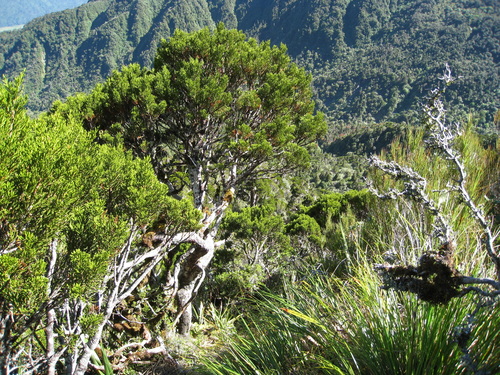
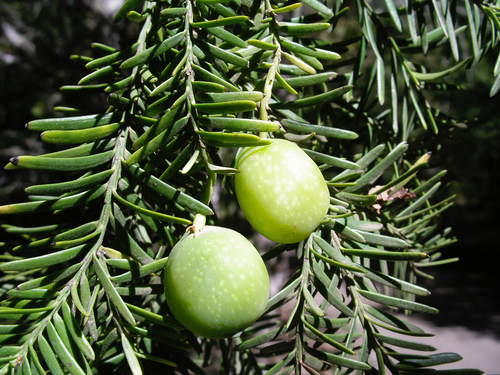
Prumnopitys andina grows up to 30 meters (98 feet) tall, with a straight, cylindrical trunk that can reach up to 2 meters (6.6 feet) in diameter. Its bark is gray and shiny. The leaves are linear to sickle-shaped, measuring 15–30 mm long and 2 mm broad. Its seed cones are highly modified, reduced to a central stem 2–4 cm long that holds 1–4 scales. Each scale matures into a berry-like, oval structure 10–15 mm long and 10 mm broad. These structures start green and mature to dark purple, with soft edible pulp covering a single seed. Birds disperse the seeds by eating the berry-like structures and excreting the seeds in their droppings. Seeds of this species are very difficult to germinate. The edible fruit-like structure (technically an aril) is tasty, up to 1.5 cm (0.59 in) long, and blue-purple. Native American people in Chile eat these arils, and they are also used to make marmalade. This tree is occasionally grown as an ornamental tree and hedge in oceanic climate regions of northwest Europe and the Pacific Northwest of North America. In these areas, it is sometimes called "plum-yew" or "plum-fruited yew", though these names are more commonly used for plants in the genus Cephalotaxus. Its wood is yellowish and good quality, and is used for furniture and construction.