About Protopulvinaria pyriformis (Cockerell, 1894)
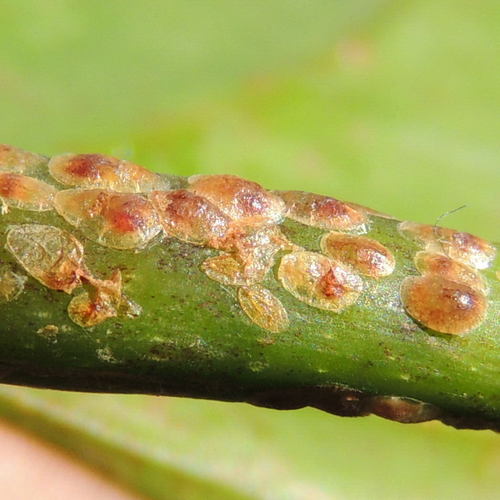
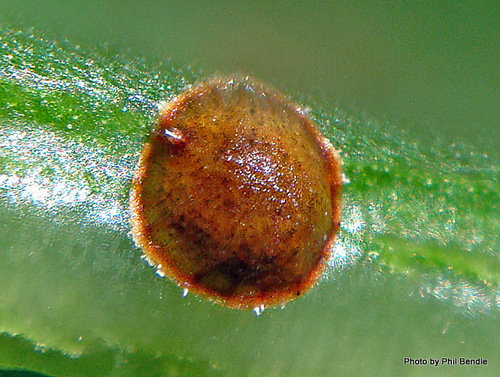
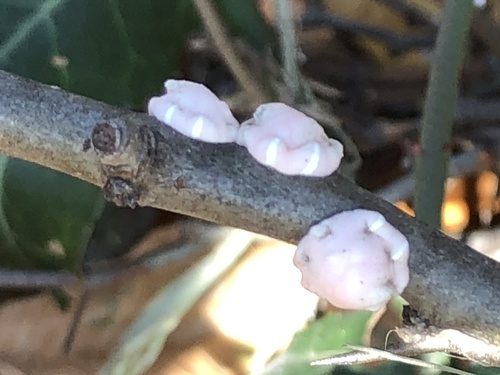
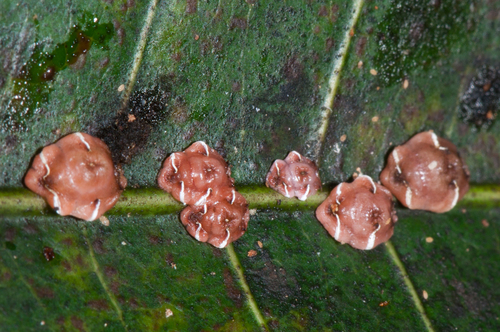
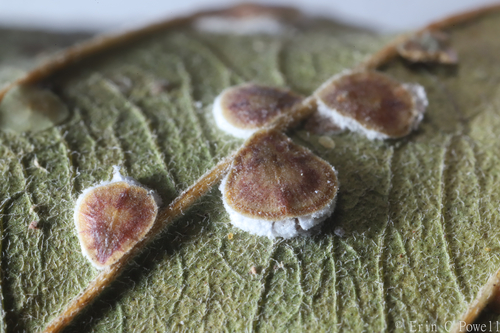
Protopulvinaria pyriformis, commonly known as the pyriform scale, has the following characteristics. Adult female pyriform scales are pear-shaped or heart-shaped, and measure approximately 3 mm (0.12 in) in length. They are protected by a reddish-brown scale marked with radial stripes. In mature females, the scale hardens, and a fluffy white ovisac projects slightly out from underneath the scale. Male individuals of this species have never been recorded in South Africa, but they have been observed in Florida. Nymphs are pale green, flat and oval, while eggs are pale yellow. The pyriform scale has been recorded in Australia, South Africa, Israel, Italy, France, Spain, Cuba, Florida, and Peru. It most commonly occurs on avocado, and in Peru it is reported to be the most damaging insect pest of avocado. It has also been found on citrus in Spain. Some avocado cultivars appear to be more susceptible to attack by this scale than others. Mature adult females produce batches of 200 to 300 eggs. Most populations reproduce via parthenogenesis, and females store eggs in their ovisac until the eggs hatch. The first instar nymph, called a crawler, moves away from the mother scale after hatching. After approximately 10 days, the first instar develops into a second instar; after another 17 days, it becomes a third instar. The third instar matures into an immature adult after a further 25 days. The immature adult stage lasts around 28 days, after which the adult becomes fully mature, starts producing eggs, and lives for approximately 45 more days. Unlike females of most soft scale insect species, female pyriform scales are capable of moving around. In South Africa and Israel, this species has two generations per year.