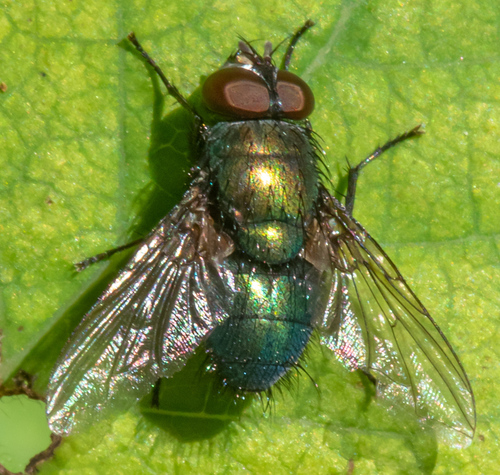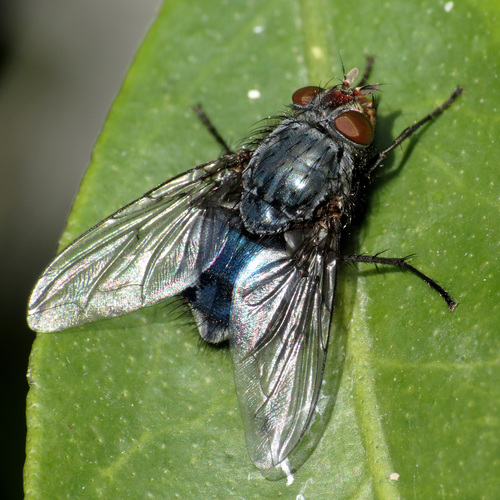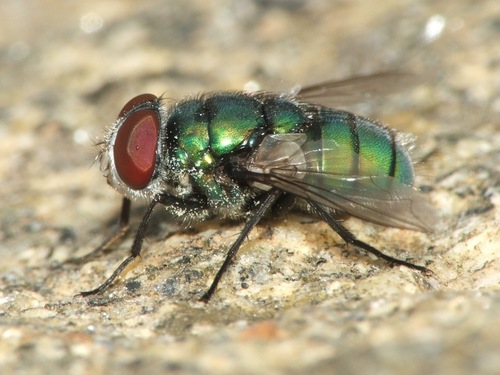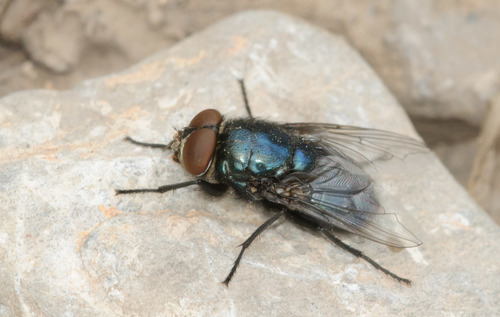
About Protophormia terraenovae (Robineau-Desvoidy, 1830)
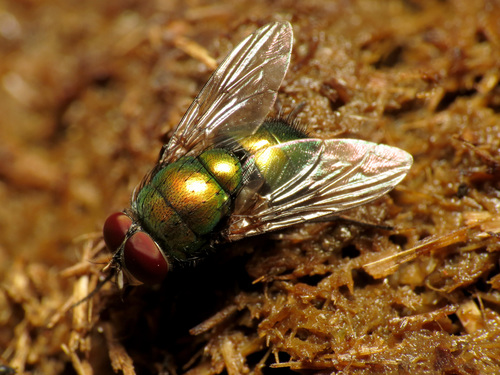
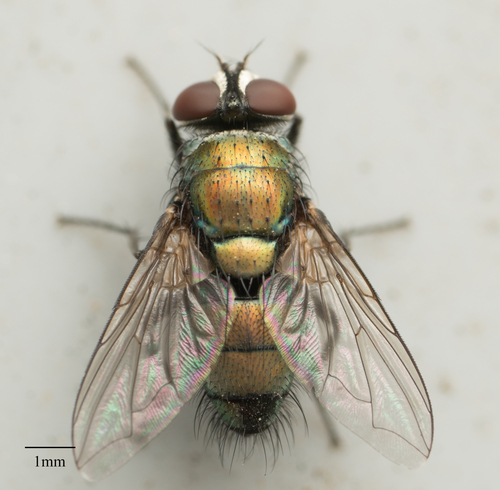
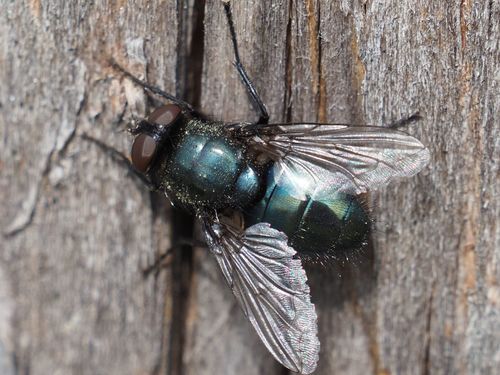
Protophormia terraenovae, first described by Robineau-Desvoidy in 1830, is commonly known as the northern blowfly, blue-bottle fly, or blue-assed fly (called blue-arsed fly in British English). It is distinguished by its deep blue coloration and large size, and is an important species across the entire Northern Hemisphere. This species is notable for two key roles: it acts as an economically damaging myiasis pest of livestock, and it provides antibiotic benefits when used in maggot therapy. It is also valuable for forensic science: because its larvae develop at a rate that depends on temperature and are commonly found on corpses, they can be used to determine the minimum post-mortem interval, or mPMI. Protophormia terraenovae has a Holarctic distribution, meaning it occurs across the entire Northern Hemisphere. It is common in cool regions, and is the most cold-tolerant of all calliphorid fly species, able to withstand extreme cold temperatures. This species can be found as close as 550 miles from the North Pole, and is abundant throughout the Arctic. In North America, its range extends from Mexico all the way to Canada. In warm regions such as Texas and Florida, sightings of P. terraenovae are rare and mostly limited to the winter months. At high latitudes and high elevations, this fly is active as a spring or summer species. Medical maggot debridement therapy, or MDT, is regularly used to cleanse and disinfect chronic wounds that contain necrotic (dead) flesh. Multiple studies have confirmed that MDT works well to treat wounds that have not healed through other treatments. Effective MDT requires blowfly species that consume only necrotic tissue while cleaning the wound, and P. terraenovae is one of the few blowfly species that meet this requirement. Like most blowfly larvae, P. terraenovae larvae are necrophagous: they develop inside the bodies of dead vertebrates, feeding on necrotic tissue. Unlike most other blowfly larvae, which eat both necrotic and healthy living tissue, P. terraenovae only targets dead tissue, making it a useful species for therapy. P. terraenovae also produces antibiotic compounds while it feeds: secretions from its larvae are effective at fighting infections caused by Streptococcus pyogenes and Streptococcus pneumoniae. The primary safety risk associated with MDT use is sepsis, and P. terraenovae has been linked to five reported cases of bloodstream infection. To avoid this complication, P. terraenovae maggots must be raised under sterile in vitro conditions. When these safety precautions are followed, using P. terraenovae to treat chronic wounds remains a safe and efficient wound treatment method.