About Protohermes grandis (Thunberg, 1781)
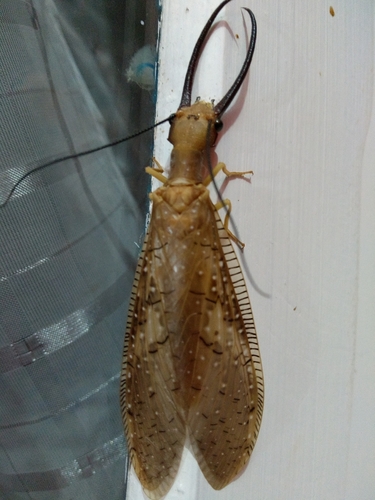
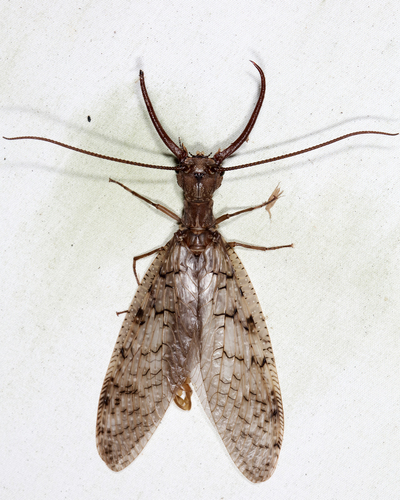
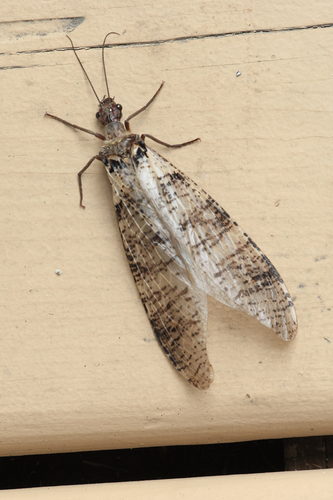
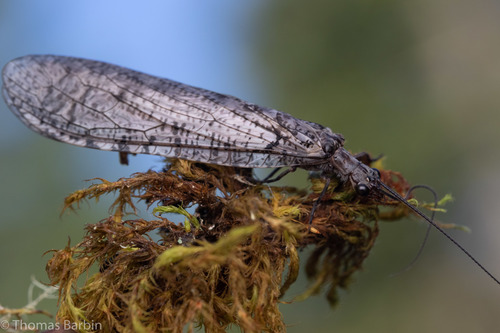
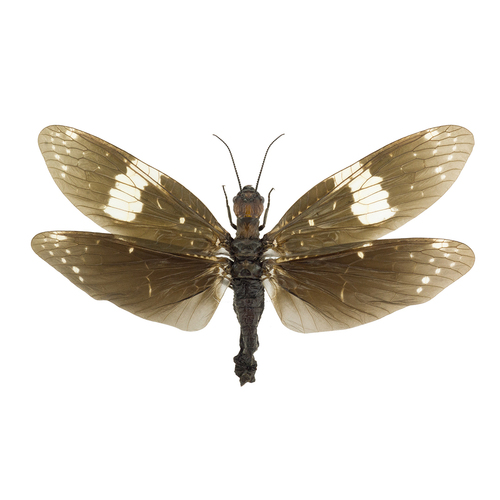
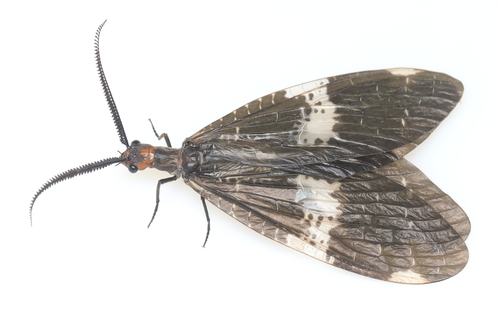
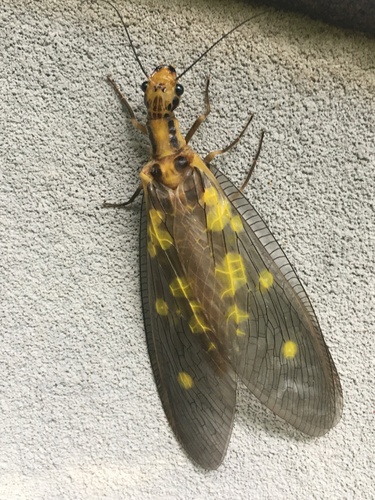
Adult Protohermes grandis occupy a wide range of ecosystems, including streams, flatlands, forests, and mountains. Their larvae live in clear water, such as streams. Adult P. grandis measure 36 to 40 millimeters in length, and have slender bodies with four large wings. The body is light yellow-brown, and the wings bear yellow spots. This species is nocturnal: adults fly at night and rest during the day. P. grandis is sexually dimorphic. During copulation, males attach their spermatophores to females, and this increases the female’s reproductive output. Unlike males of other Protohermes species, male P. grandis do not have enlarged mandibles for fighting other males. Due to the high energetic investment required to produce each spermatophore, P. grandis requires several days between consecutive matings, unlike many other Protohermes species. P. grandis has a variety of uses. It is used in traditional Japanese medicine to treat various issues affecting the lungs, gut, and stomach. Because its larvae inhabit aquatic environments that are often impacted by pollution like domestic sewage, this species is used as an indicator to check freshwater cleanliness and detect heavy metal contamination in rivers. In Japan, P. grandis is sold as a food souvenir called zazamushi. Research has found that extract from P. grandis improves reproductive outcomes in mice, producing larger litter sizes and higher offspring survival rates.